
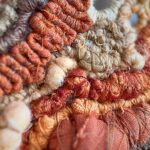
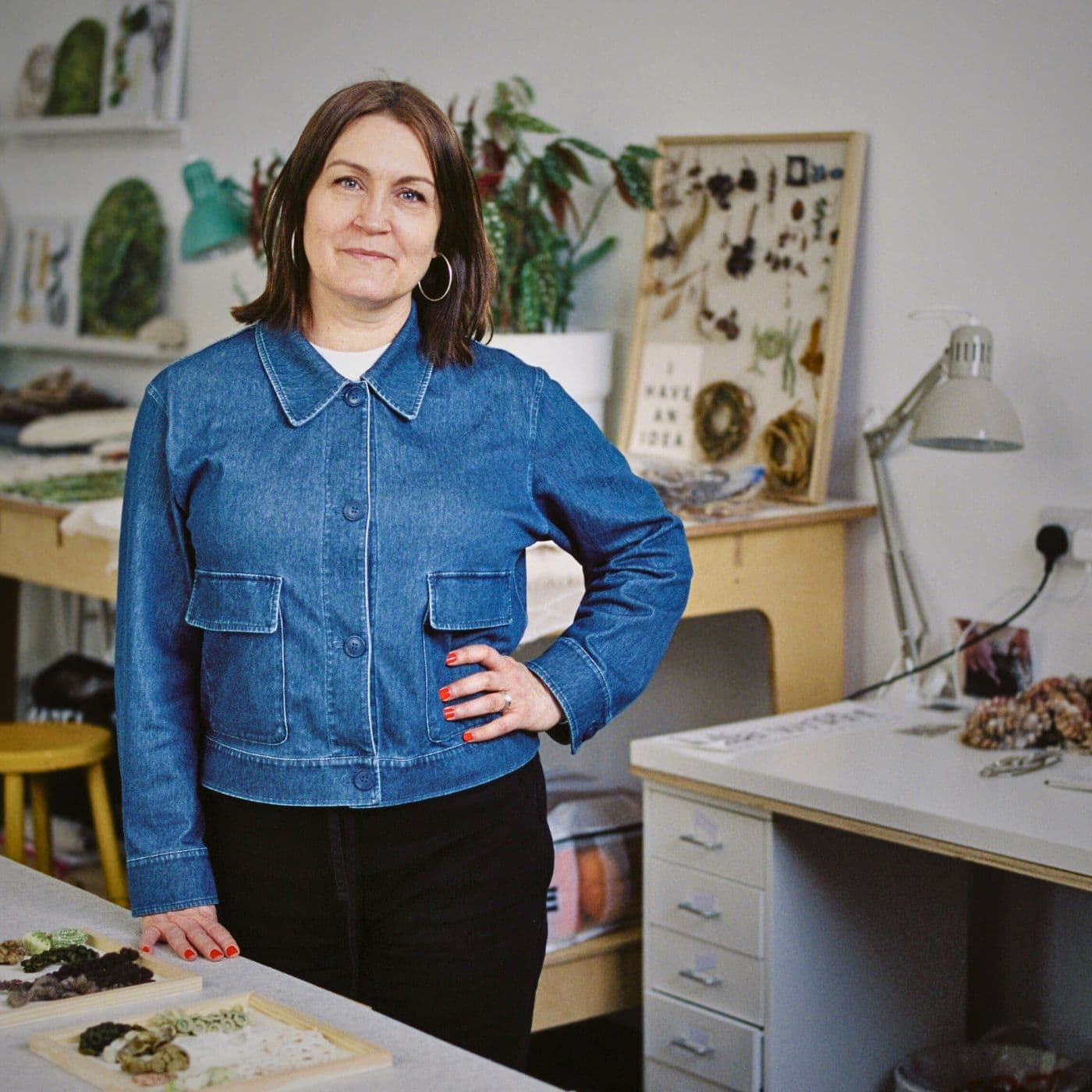
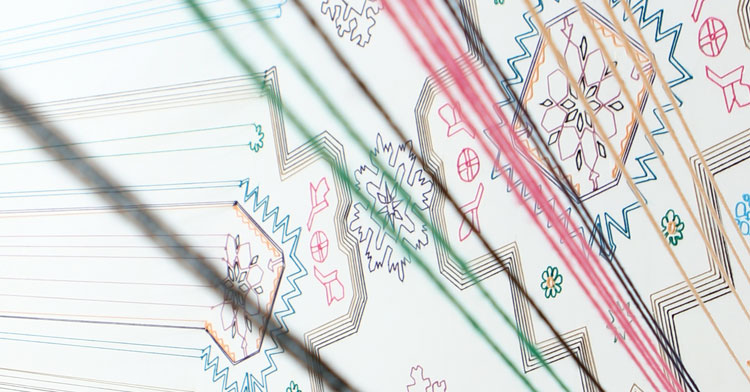
Mixed media artist Julia Wright is rarely without her sketchbook and camera. Those are her tools for capturing the fleeting details most people miss. Her embroidered and sculpted works are born from a close attention to the natural world.
Julia is captivated by nature’s fine print like the lines, textures and colours that whisper rather than shout. She doesn’t just observe, she experiences and records moments that become visual echoes of time and place.
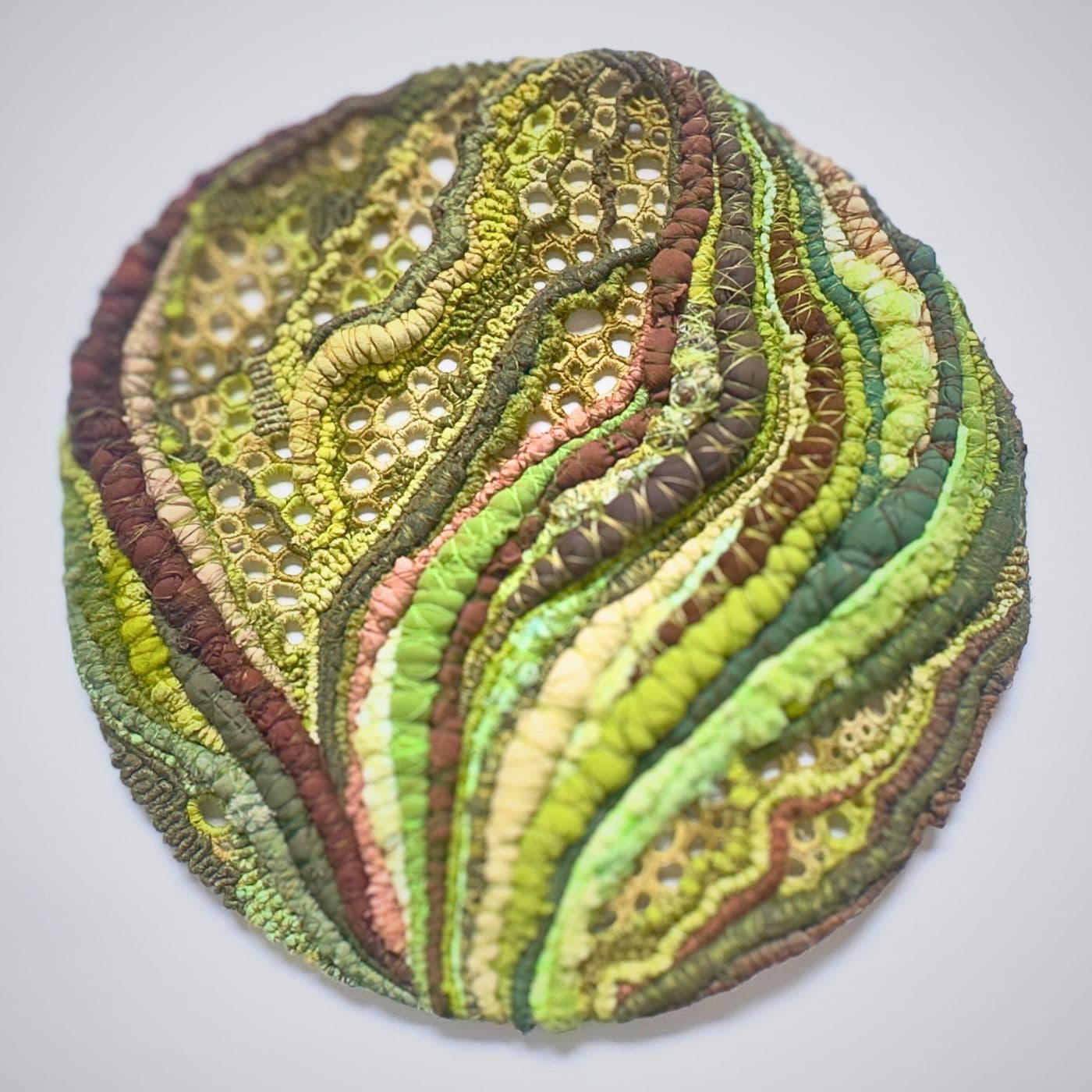
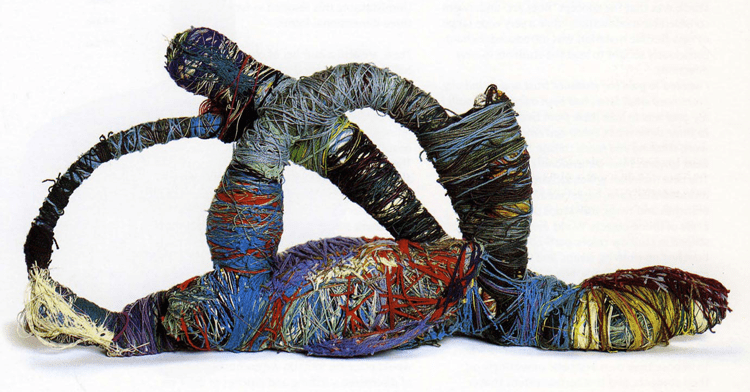
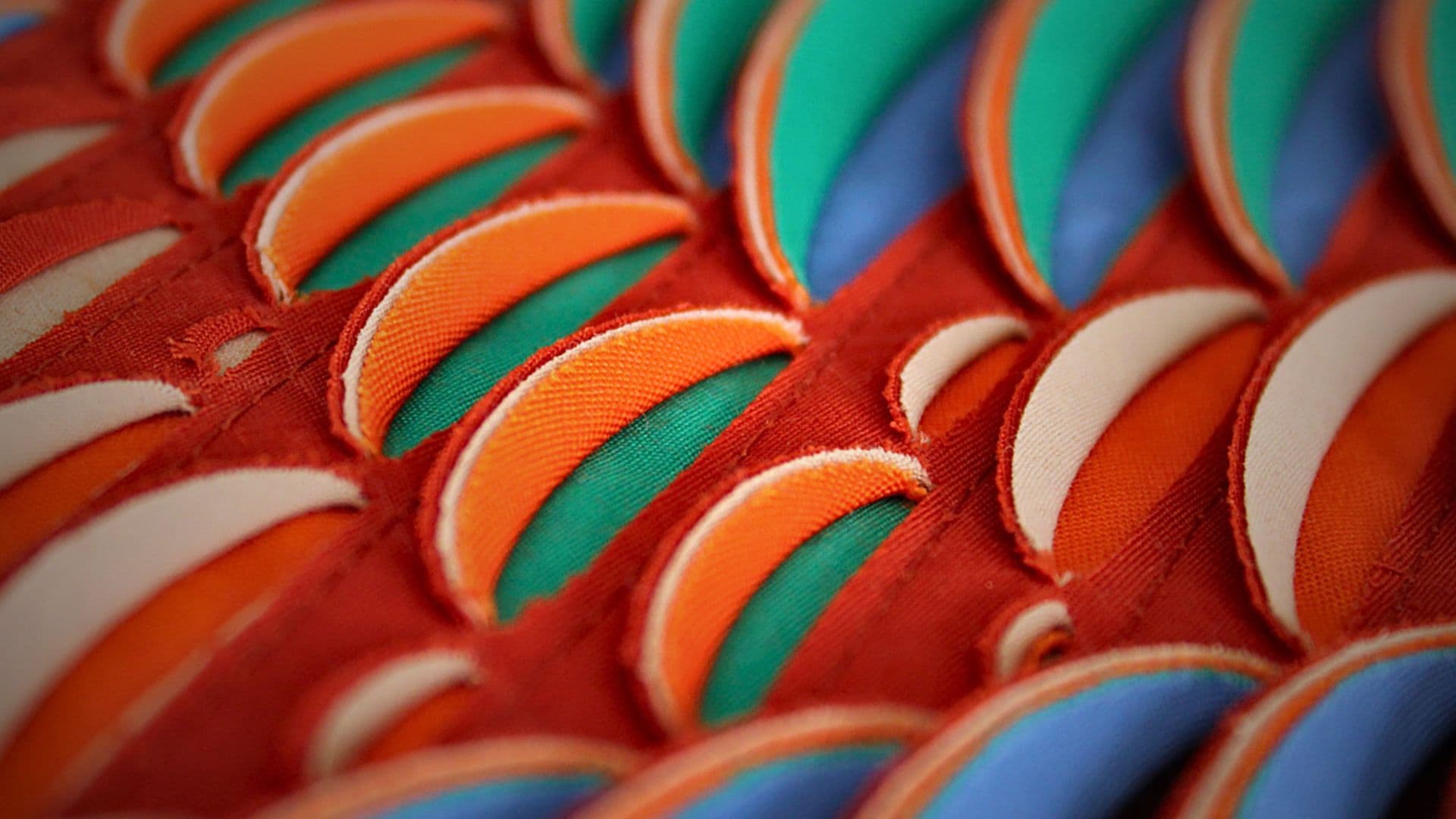
From that first spark of observation, her process flows intuitively. And her materials lead the way. Discover how Julia wraps, binds, sculpts and embroiders recycled frayed and worn fabrics full of history, creating tactile memories of place.
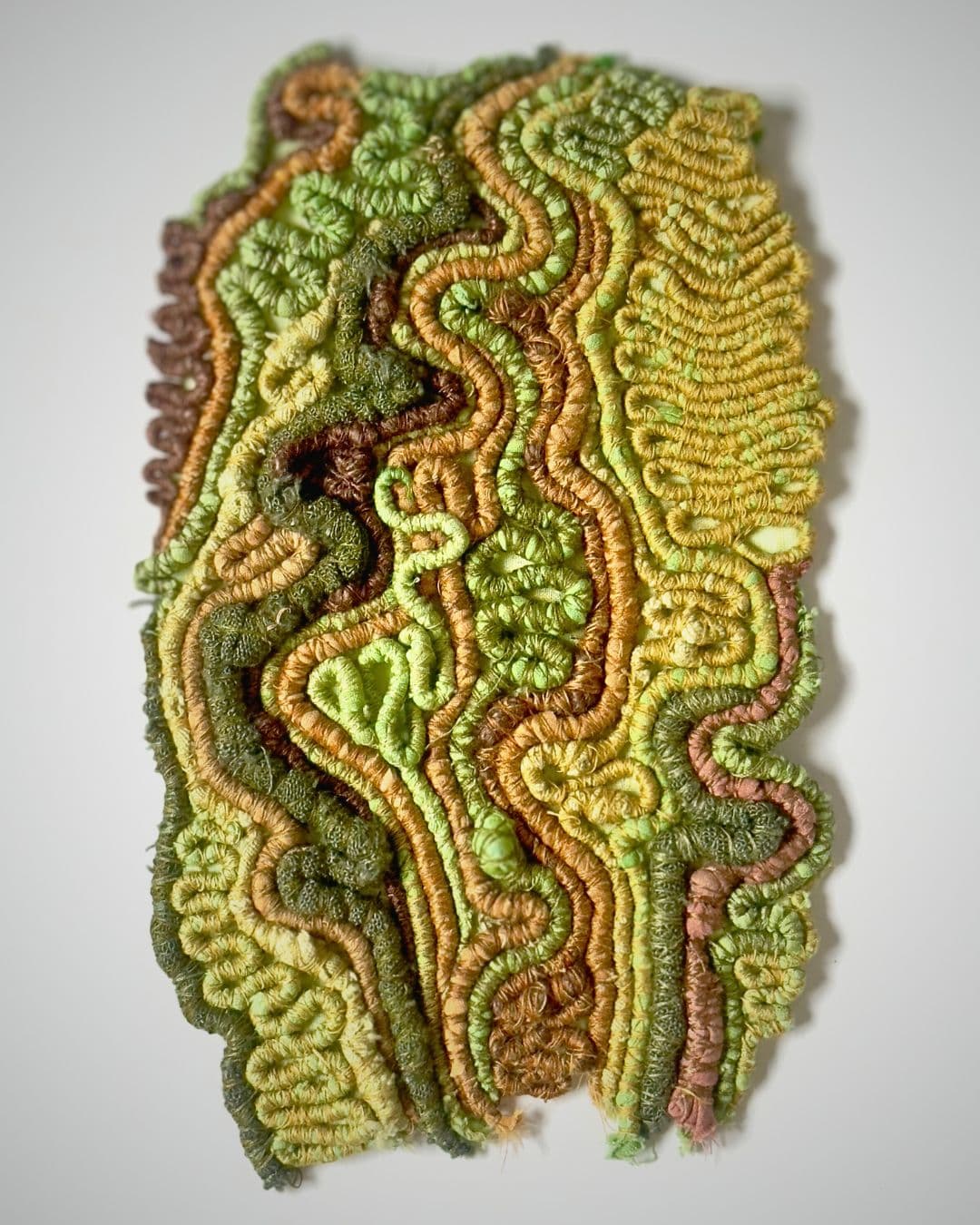
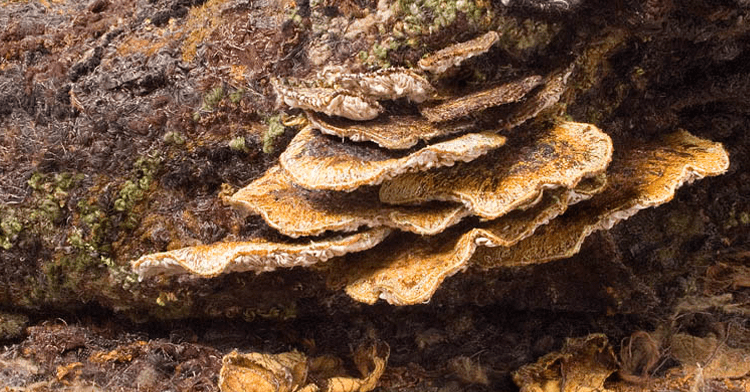
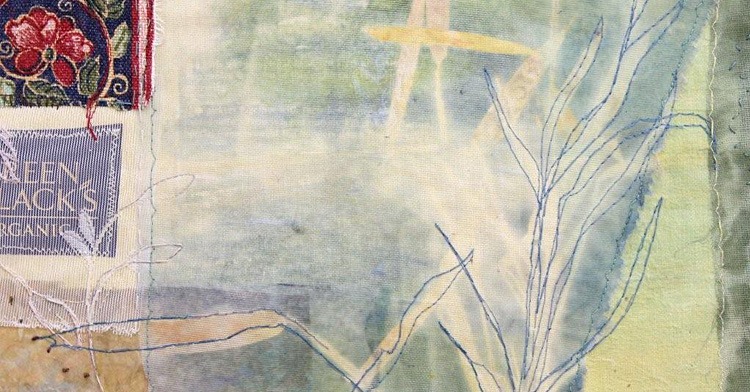
Julia Wright: I create textural, hand stitched mixed media textiles inspired by close-up details found in nature, landscapes and coastal environments.
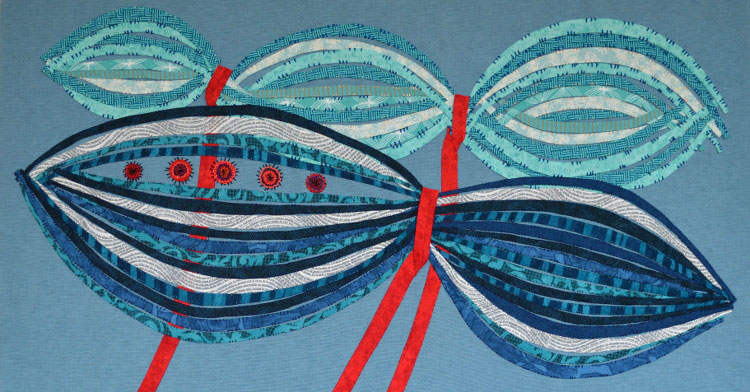
My inspiration includes the cracks in pavements and walls, random lichen growth in fallen trees, barnacles settled in the crevices of sea cliffs, seed pods, tree roots, seaweed and shells. I find the resilience, seasonal growth and perpetuation seen in nature uplifting.
Sustainability is at the heart of my work. It’s in the materials I use and the inspiration behind my ideas. I would encourage everyone to re-purpose existing fabrics, as they have such richness and can be inspiring in themselves.
“It’s liberating to allow yourself to be guided by what’s available. It sparks creativity.”
Julia Wright, Mixed media textile artist

An expression of place
I don’t plan my work in the traditional sense; my pieces grow organically. I take photos wherever I go, mostly extreme close-ups of texture, surface, colour and line.
I always carry a small handmade concertina sketchbook with me, usually no more than 10cm (4″) wide when folded, to capture things I notice in the world around me. These sketchbooks are more than just drawings. They hold moments, memories and a deep sense of place. I can remember exactly where I was and how I felt when I made each one.
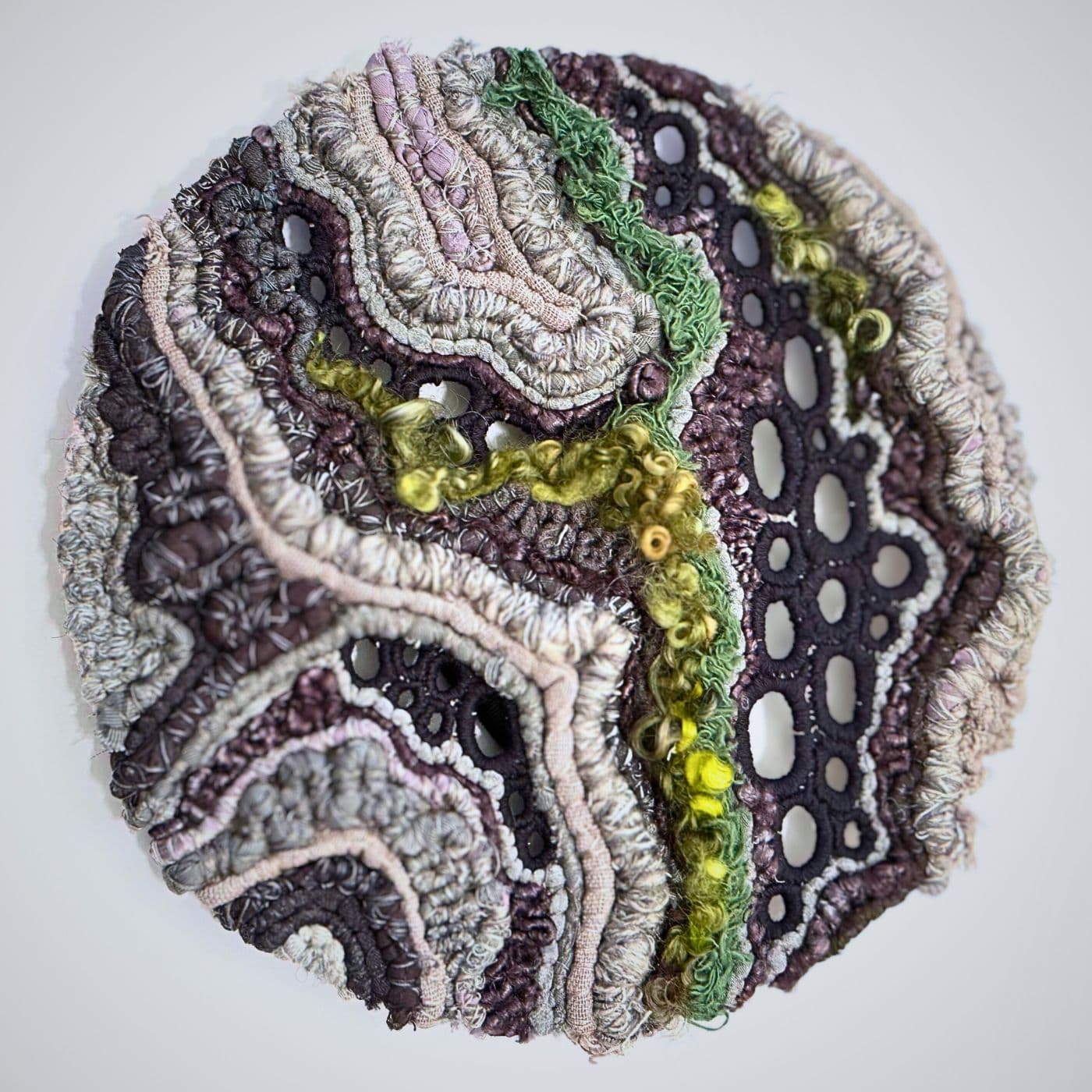
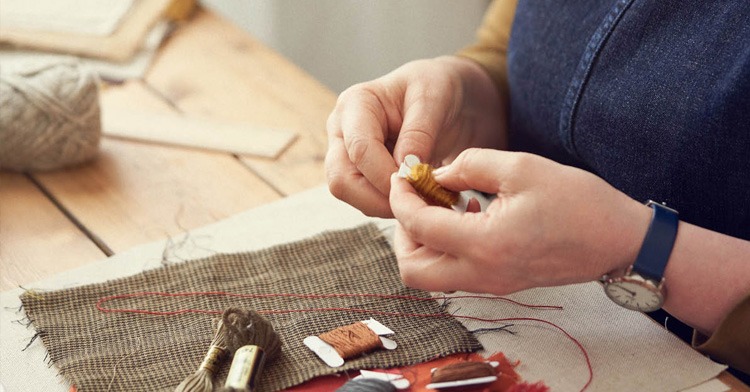
These sketchbooks and photographs are my starting points. I usually begin with a loose idea, perhaps a colour palette or a certain kind of shape, often based on the materials I have at hand. I start by making a series of wraps, which help me determine the direction of the piece.
I typically work on a backing fabric without an embroidery hoop. I prefer the way the fabric distorts and moves naturally as I stitch, letting the surface develop its own rhythm.
I begin by tightly hand stitching a single wrap onto the fabric. That first mark guides where the next will go. It’s an intentionally slow, mindful process.
I aim to create a focal point in each piece, sometimes through fine detail, sometimes with a bold pop of colour or strong directional lines.
“Each artwork is a tactile map of experience – it’s a layered expression of both landscape and memory.”
Julia Wright, Mixed media textile artist
Sustainability driven
“The unpredictability of working with recycled fabrics excites me.”
Julia Wright, Mixed media textile artist
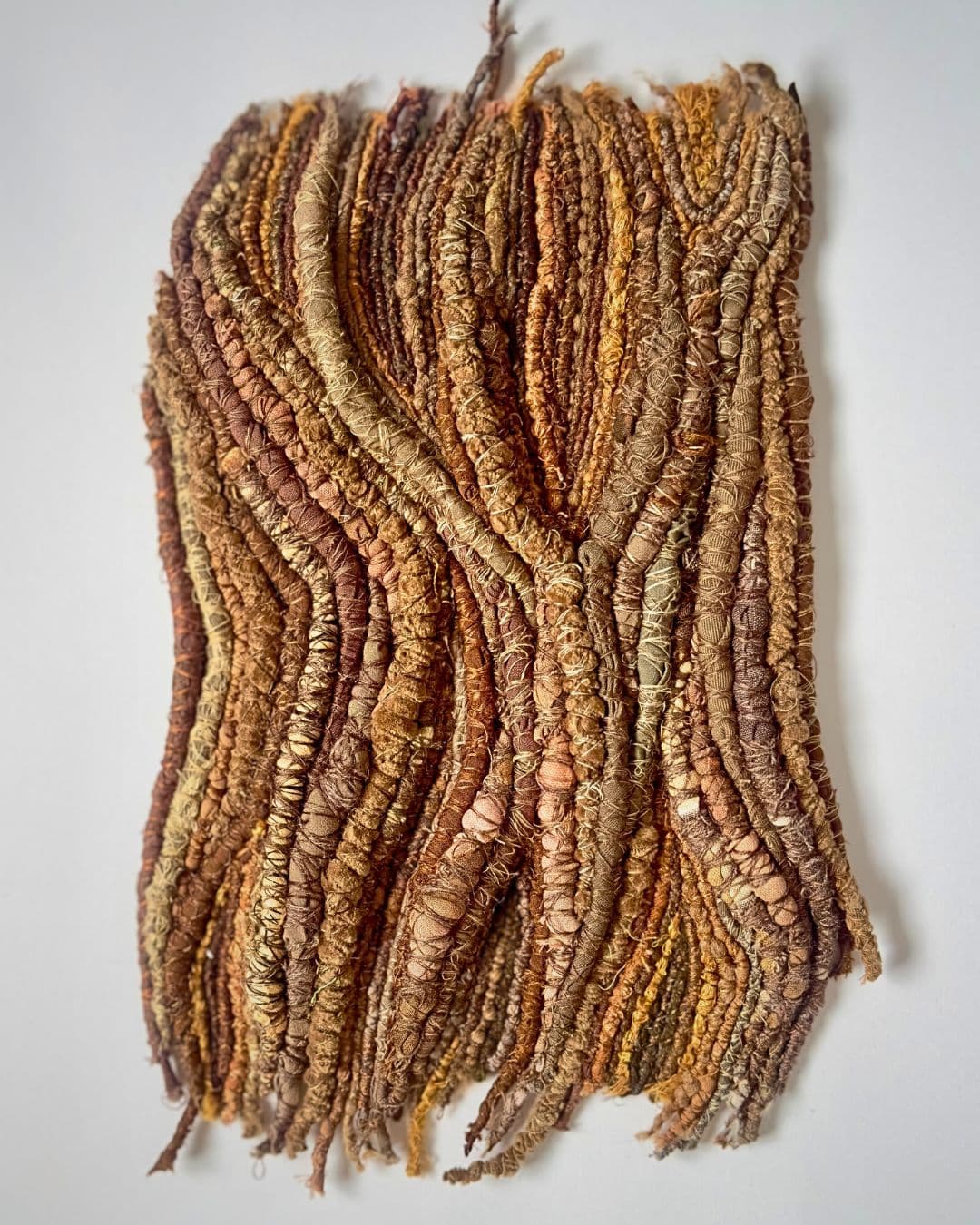
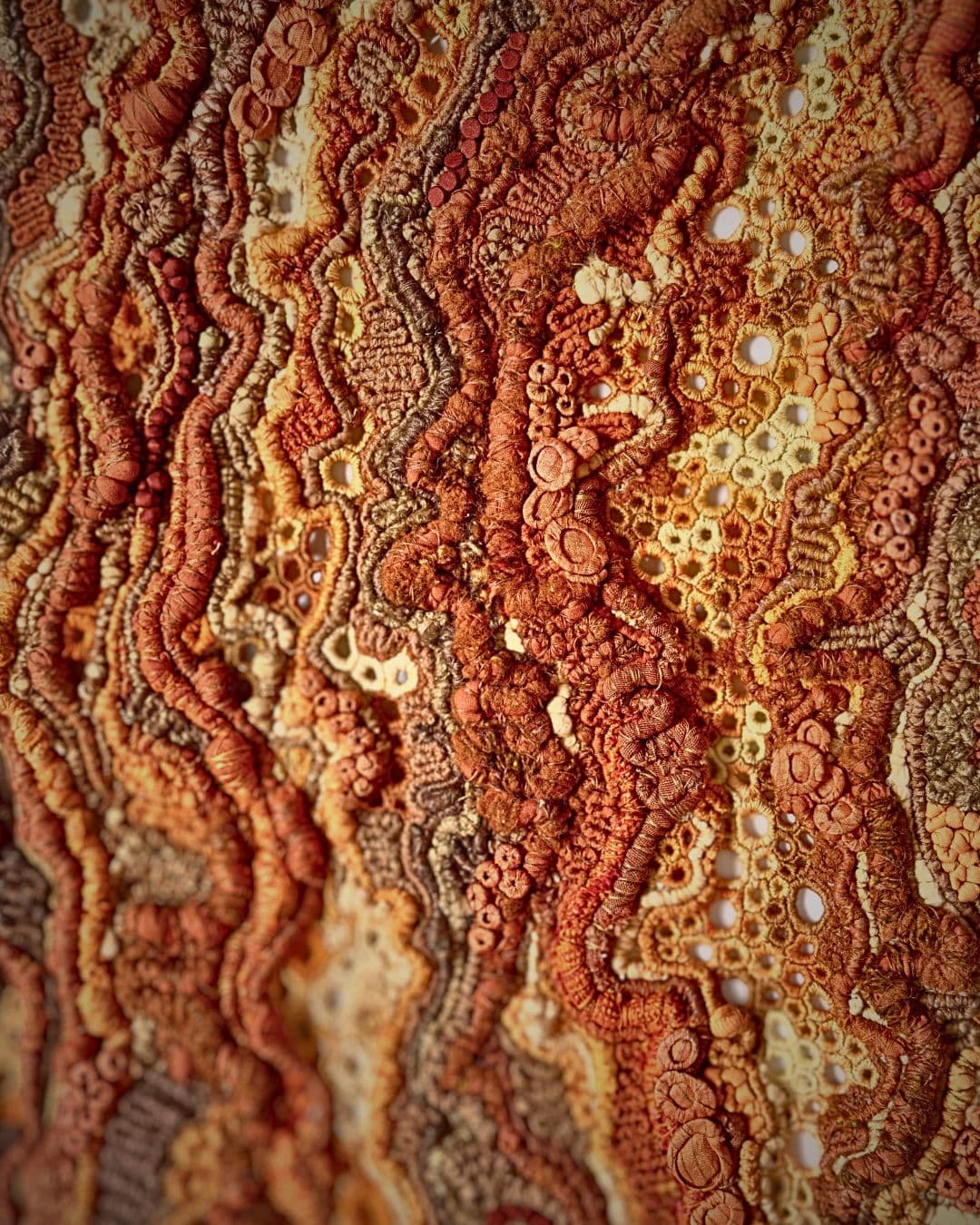
Sustainability is central to my practice. I aim to keep textiles out of landfills by avoiding new fabrics wherever possible. I like to breathe new life into materials that might otherwise be discarded.
I focus on using recycled and secondhand fabrics, sourced from charity shops, vintage textile fairs, and recycling centres, as well as donated materials. I value the sense of spontaneity this brings to the creative process.
I primarily work with natural fibres like cotton, linen and silk. I like the fact that I can dye them to match my desired colour palette. I enjoy the contrasts between their different densities, textures and surface qualities, from the rough to the fine and delicate.
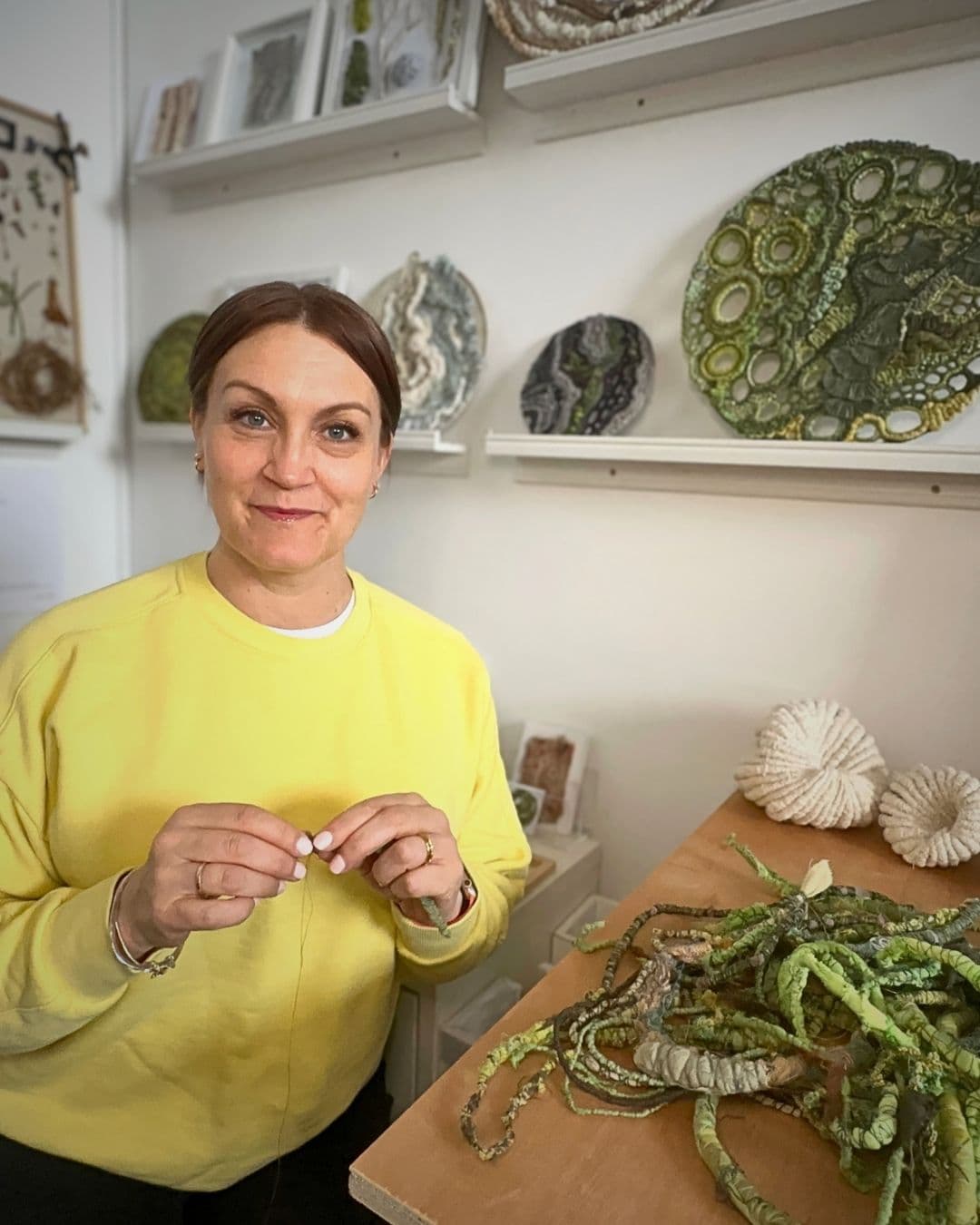
Using up leftovers
In my Stitch Club workshop, I share ways to interpret elements within the landscape to stimulate ideas for composition. I encourage the use of recycling off-cuts of fabrics, found materials and threads left over from previous projects.
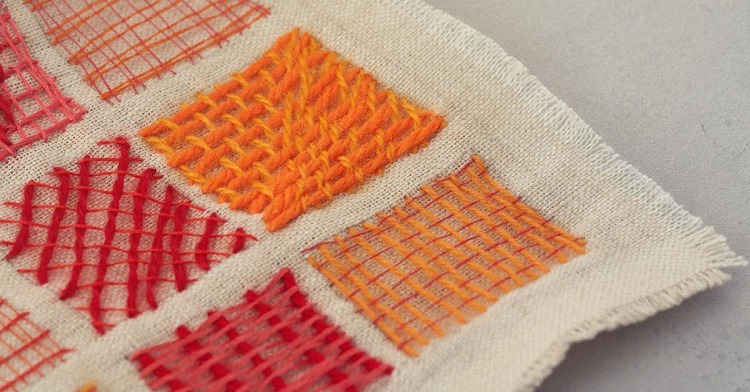
Using an inspirational photograph as a starting point, I show members how to create a series of textural wraps hand couched onto a backing fabric.
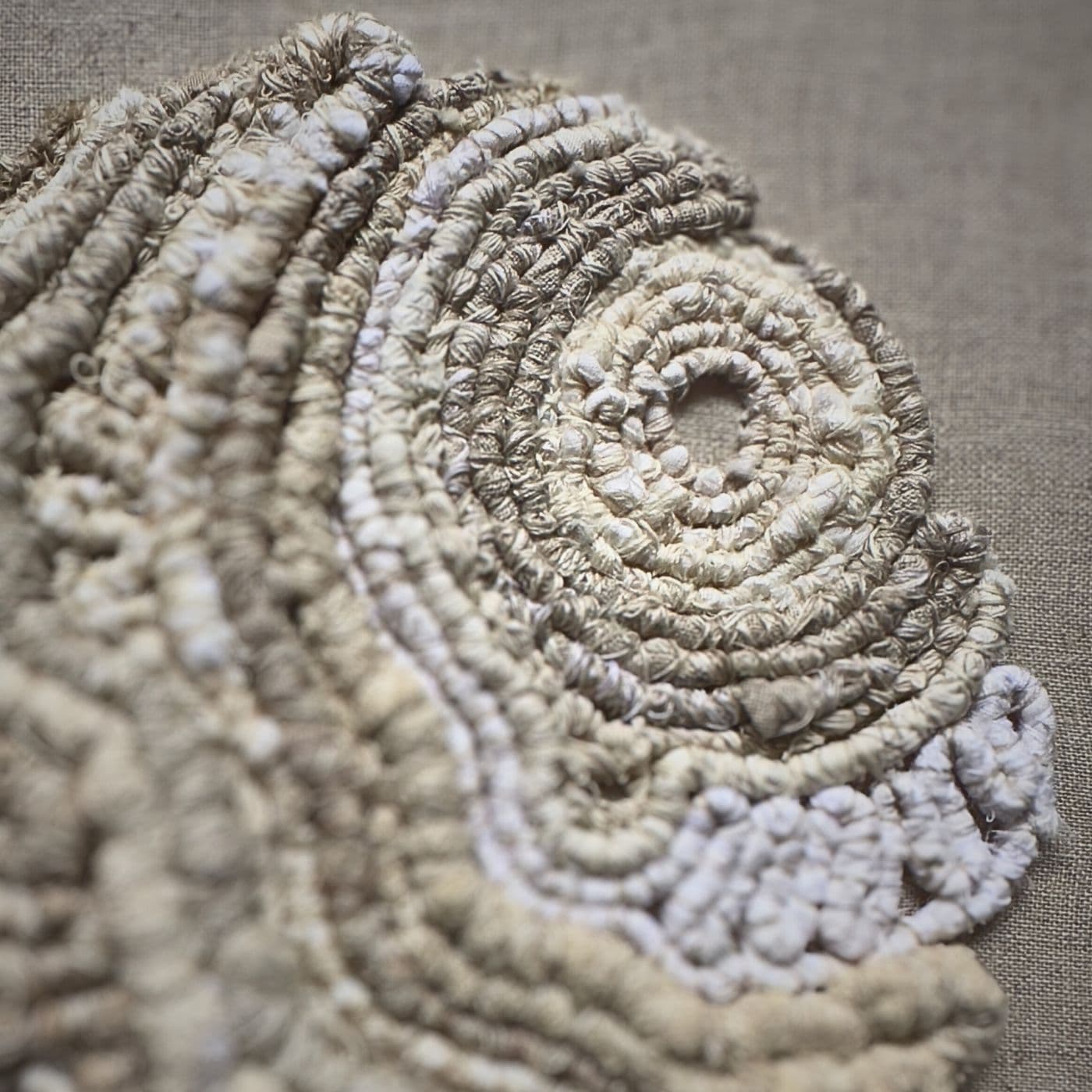
Inspired by materials
I always recommend beginning by gathering a selection of fabrics that inspire you. I suggest creating a resource pack, grouping fabrics and threads by colours that complement one another.
Pay attention to textures, surface qualities, and varying weights. I find that smaller pieces, strips, and irregular shapes are particularly engaging, as they feel less overwhelming than large, uncut fabrics.
I also favour working with worn materials, searching out frayed hems, seams and sections with holes as they often ignite new ideas and creative possibilities.
It’s a good idea to start by making small-scale pieces. Avoid the temptation to dive into a large project, as this can be discouraging and it’s easy to lose interest or momentum.
“A smaller, focused section, completed with attention to detail and technique, can be most satisfying.”
Julia Wright, Mixed media textile artist
Creative genes
I feel fortunate to have grown up in a family of creatives. My dad studied tapestry weaving at university and was an art teacher, photographer and accomplished painter. He continued his practice through most of his life.
My mum was a professional dressmaker and always made our home furnishings. She also built furniture, put up shelves and made jewellery.
Because of them, I’ve always considered being practical and hands-on as normal. We were always surrounded by art materials so drawing and painting were just something we did all the time. I can’t remember not being able to knit and sew.
All the women in my family were dressmakers and knitters. Many of my childhood clothes were handmade and I have fond memories of being sent knitted mittens by an aunt when I moved to Scotland for university as she was worried I’d be cold.
My family fully supported me when I studied for a degree in Applied Design at Edinburgh College of Art. At university my work was sculptural and very large scale. I worked in clay and glass initially, then wood carving and jewellery-making.
I was conscious of making the most of every opportunity. I had access to the best tutors, technicians and facilities and had a big studio space which I knew would be hard to find after graduation.
However, outside my studies, I worked in textiles as they were so accessible. Fabrics and threads were readily available and easy to use at home.
Inspired travel
Once I left university, I headed off travelling around the world. My initial ‘year abroad’ became seven years, on and off, including a couple of years living in Japan.
Fabrics and threads were easy to transport and source whilst travelling so my practice naturally focused more on working in textiles.
I recently moved into a big studio close to home so my work is developing into larger scale, sculptural textile pieces which is hugely exciting. The possibilities of working in fabrics and threads seem endless to me. Their malleability has no limit.
I am fortunate to be able to still travel and over the past few years have delivered workshops around the UK and in Europe and Australia with more planned in the future.
Drawing, photographing and responding to different landscapes on my travels as well as working with whatever materials are available in different locations continue to capture my imagination.
Responding to nature
My work features in a gallery space at The Knit and Stitch Show in Harrogate in November 2025, alongside the work of my friends Bev Caleno and Bryony Jennings.
As the Wild Art Textiles Collective we are presenting a themed exhibition called ‘Strand Lines’, responding to the British coastline. I have visited this show for many years and it’s an event I look forward to the most each year.
I am most proud of the invitations I have received to exhibit my sculptural work, jewellery and textiles in prestigious galleries in the UK and Australia.
I have also had my work featured in a couple of books. A Camouflage of Specimens and Garments by Jennifer Militello, (Tupello Press, 2016) and the forthcoming book, Contemporary Artists, Fibre and More by Charlotte Vannier (Editions Pyramid). I feel hugely grateful to have had these opportunities to have my work seen alongside artists, designers and makers whom I admire.
4 comments
Glenys Mann
It was indeed a pleasure to have Julia Wright here in Australia teaching for Fibre Arts Australia http://www.fibrearts.net.au
Julia will be returning in July 2026 to teach more of her amazing work not only within Australia but New Zealand as well. such an amazing artist to work with.
Glenys Mann CEO Fibre Arts Australia
Siân Goff
Thanks for your comment, Glenys. What an exciting opportunity to learn from Julia!
Quealy Antin
I am a beginning worker in textiles, having passionately collected a vast variety of inspiring materials to be used, without doing so. I don’t know if I can, or should destroy th them to make them into something else. My hope now is to become inafraid to break that egg and make the omelette
Siân Goff
I can understand your hesitancy, but I say, do it! Make the omelette.