
Adrian Smith takes ruching, pleating, fringe and spaghetti-straps to expansive heights. Using finicky folding, meticulous pinning and long hours of hand stitch, Adrian’s 3D surface designs ooze texture, lustre and colour.
Relying upon his 30-year career in fashion design, Adrian twists and contorts fabrics and trims to represent landscapes, sea goddesses, deadly sins and more. Tricky materials, such as silks, organza and polyesters, rise and fall in remarkable fashion. And his ‘fauxthers’? They’re the icing on the cake.
The fact Adrian largely uses recycled materials makes his portfolio even more special. Each piece is created from enormous amounts of fabrics and trims found at thrift stores and charity shops.
Enjoy this look into Adrian’s world, where manipulation is truly an artistic virtue.
Seductive transformation
Adrian Smith: I’d describe my work as ‘seduction’. Not in a sexual way, but more sensually. My work links my fashion experience with textile art in a way that directly appeals to people’s visual and tactile senses.
I have an instinctual connection to textiles and their technical challenges. And I’m drawn to fiddly, time-consuming techniques, possibly because my previous design work focused on factory repetition of garments in a series. I felt a need to distance my art’s ‘intellectual’ inspiration from my fashion design work.
Like many textile artists, I’m drawn to landscapes. I’m currently working on an ongoing series based on growing up in Orkney and experiencing its terrain, culture and folklore.
But past inspirations have been varied. For example, my first series, SALIGIA – The Seven Deadly Sins, explored the seductive nature of the sins and how almost all were sins of ego and individuality.
A series of stories
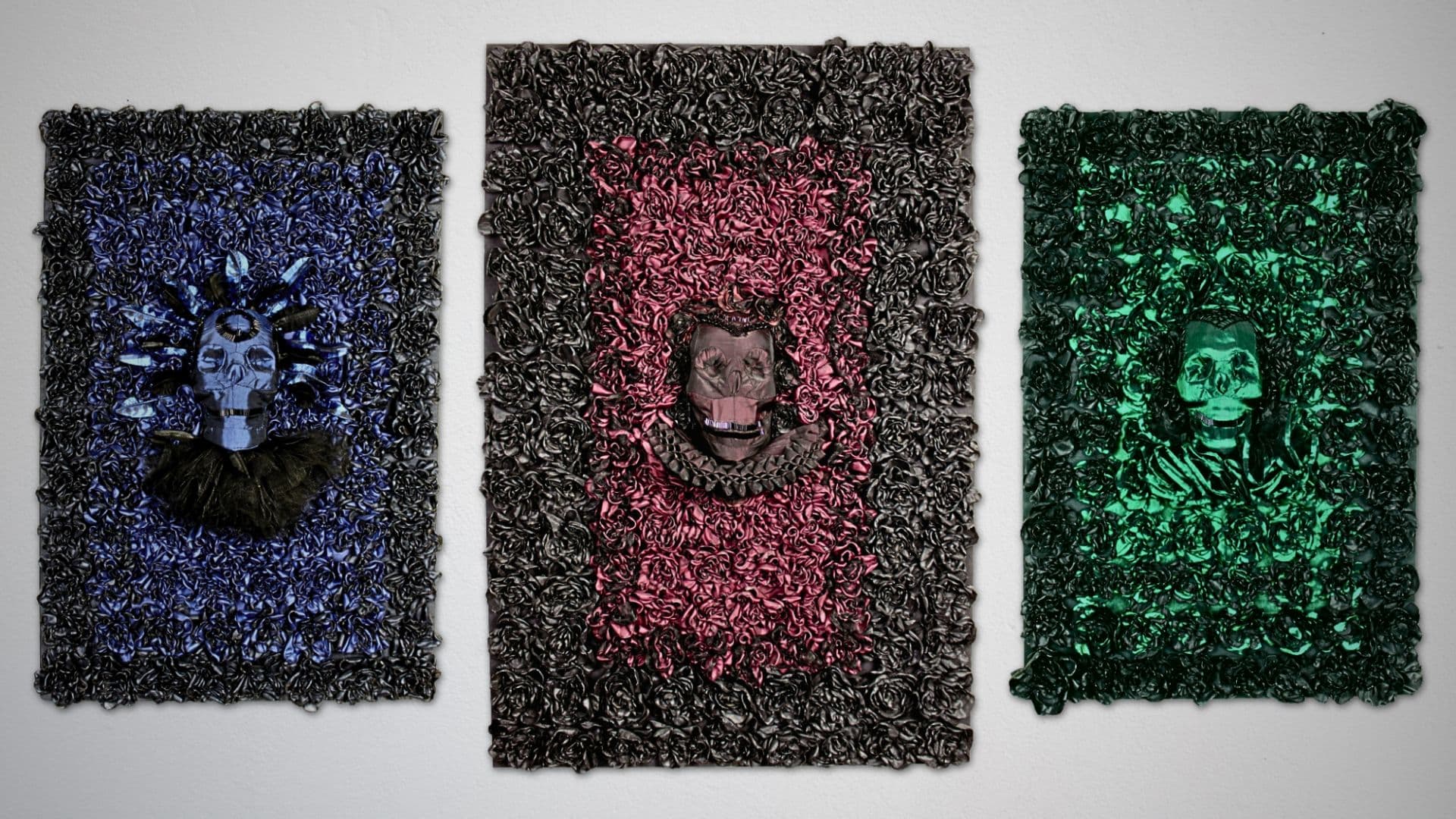
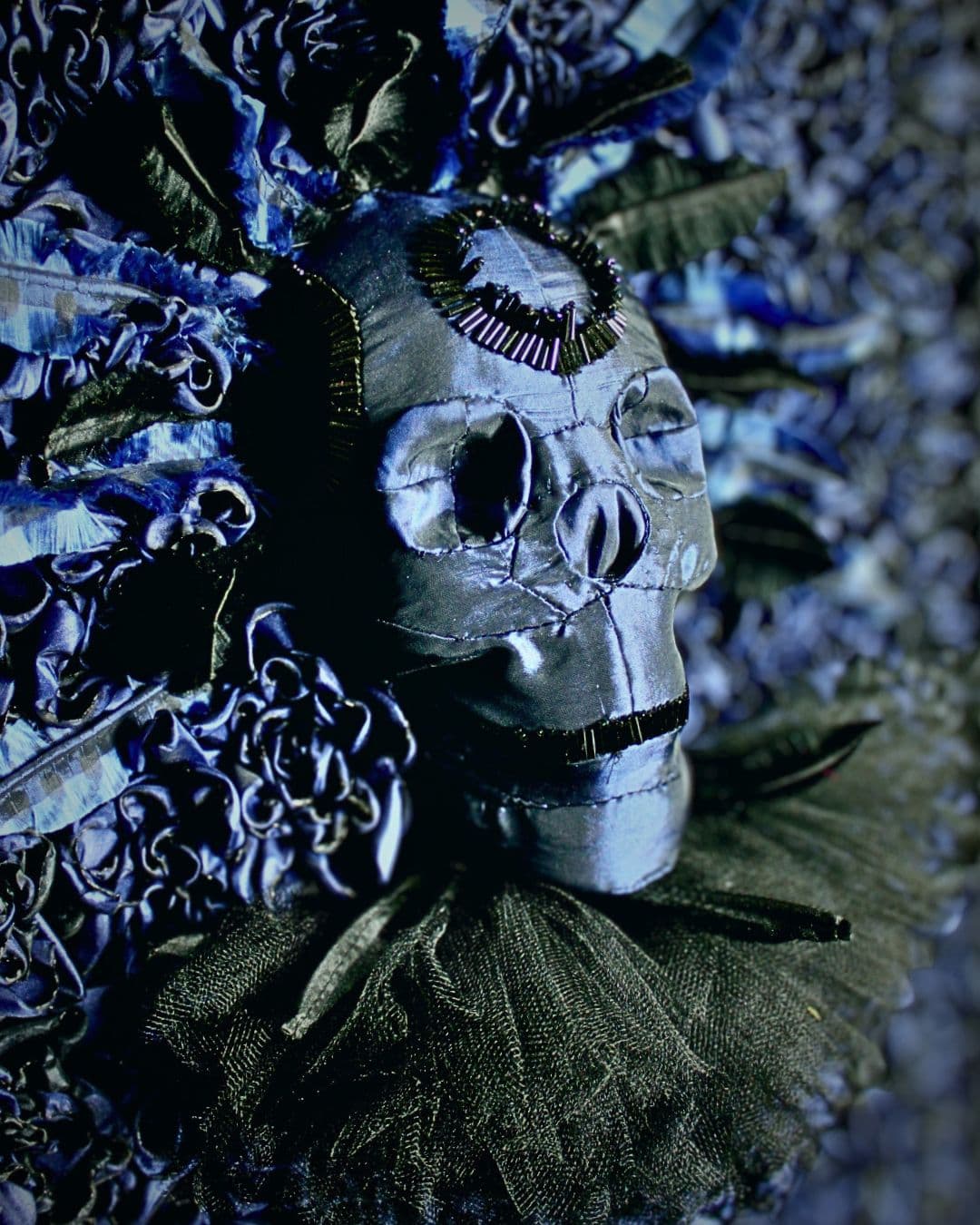
My Death Becomes Her series was inspired by a visit to the Roman catacombs along with the Jewelled Saints of Germany. The series was an interesting meeting of human vanity and the fear of death.
I choose to work in series to pinpoint a mood or message and focus my creativity in terms of direction and coherence. For me, the best source of direction comes from personal passions, interests and familiar obsessions. A personal story or fascination with a subject gives me a strong framework from which to work.
Working in series also allows me to present evolutionary stories and further explore unique facets along the way. It can be quite an illuminating process of self-discovery, but it also requires discipline to know which elements are relevant and which are just momentary curiosities.
Fashion design foundations
I’ve always been fascinated by the way people dress and present themselves, so I suppose fashion was an inevitable destination for me. After graduating with a BA Hons in fashion and theatre from Edinburgh College of Art, I later studied for an MA in design from the Royal College of Art in London. Following this, I moved to Italy to start a 30-year career in the fashion industry. I designed for several high-level luxury brands, including Gucci and Prada. And I worked with contemporary classic brands like Les Copains (knitwear) and Ck Calvin Klein (tailoring and urban sportswear).
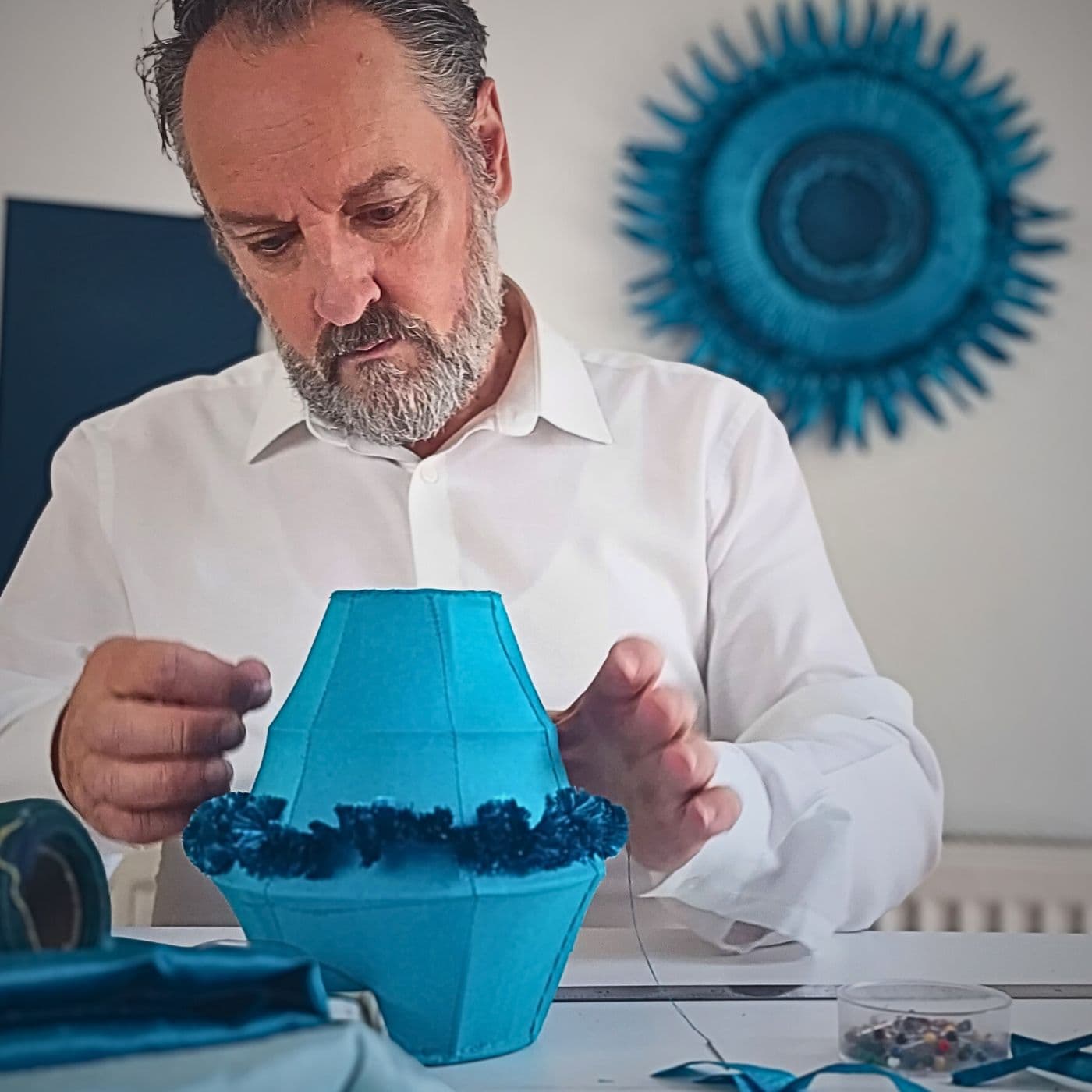
Most of my fabric manipulation techniques come from my fashion experience. I particularly remember seeing a vintage haute couture gown that I thought was made of tiny pleats. But after looking more closely, I discovered the pleats were actually tiny tubes of fabric couched onto a base. That was one of my first techniques and it’s one I still use a lot.
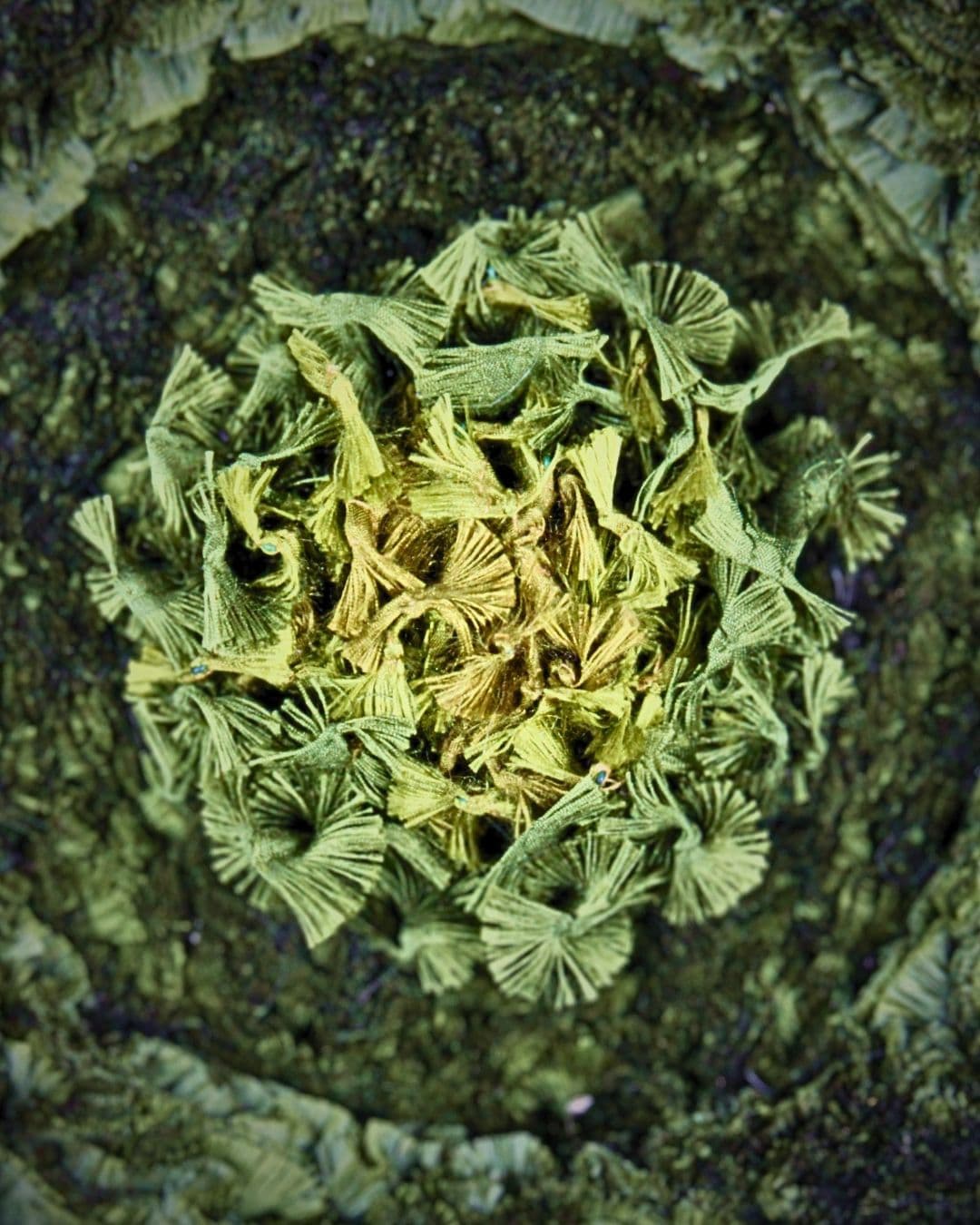
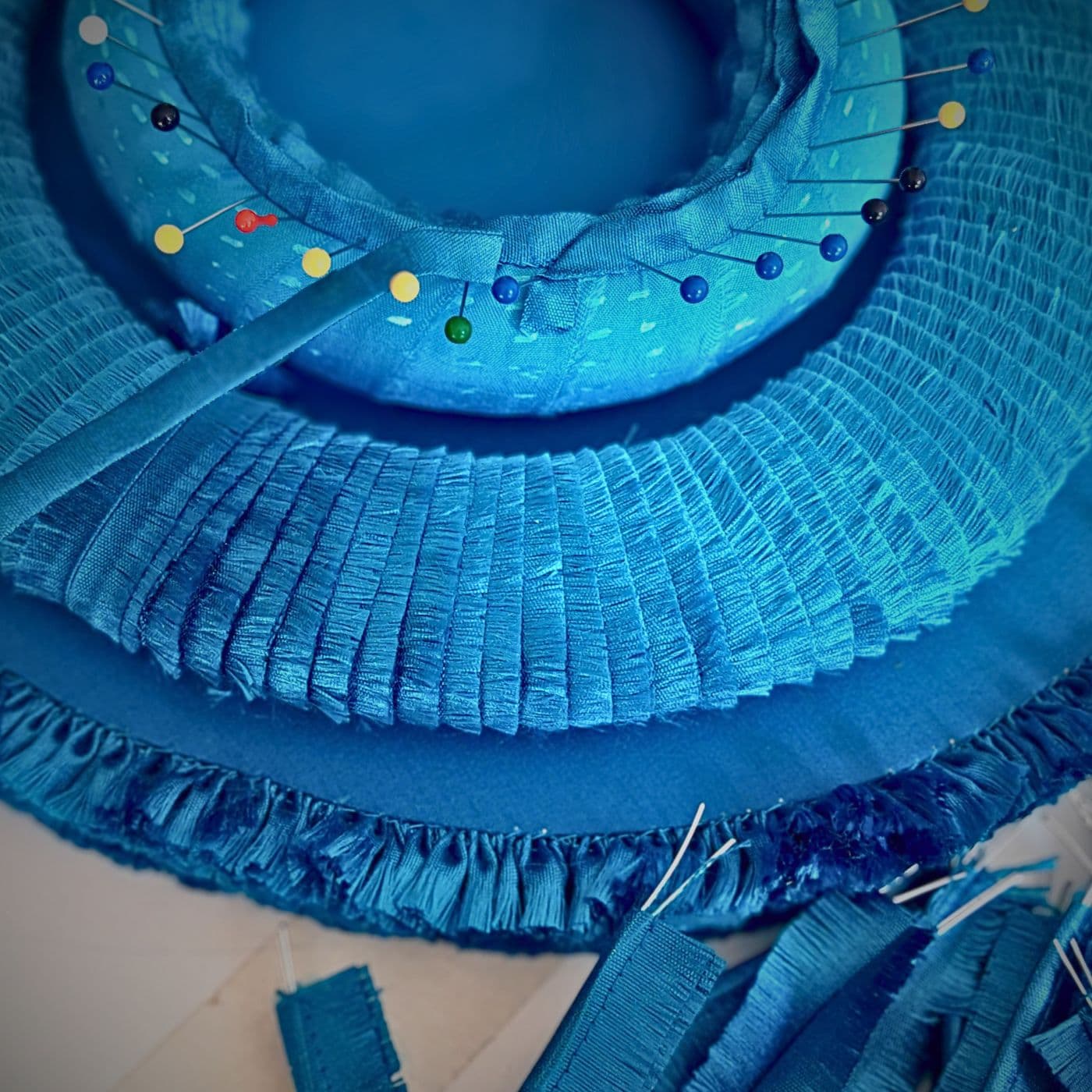
I love gradient colour effects, so my layered transparency spaghetti-strap technique grew from that. And my fringe-plush technique came about from trying to recreate a fur effect for a piece inspired by the golden fleece. I had used fringe strips before, but I discovered that gathering them tightly created a rich, furry texture.
I also modified the fringe technique to create what I call ‘fauxthers’. I’d been asked to create some millinery with feathers for a fashion show in New York. I couldn’t bring real feathers through US customs, so I developed my faux feathers. I’ve been using them ever since.
Cutting, sewing and turning the trims can be tedious, repetitive and irritating work. Beyond that, gathering and application of the trims to a base can be quite fiddly and frustrating. Patience is necessary, but I believe working slowly gives the final piece a special quality that makes the challenge worthwhile.
“My techniques are deceptively simple and the trims I create don’t take any great skill, but they do take a lot of patience.”
Adrian Smith, Textile artist
Fabrics unleashed
I’m a great believer in re-purposing. As a designer, I’m very aware of how rare it is to find something that can have multiple purposes. But that’s a challenge I enjoy. Repurposing fabrics allows me to give them a new life, versus being discarded in a landfill or incinerated.
Thrift stores and charity shops are a huge resource. Many textile artists believe the answer to sustainability is using natural fibres, but my experience has taught me many of the processes of industrial production of linen, cotton and wool all have an environmental impact of some kind.
I tend to embrace most fabric types, including synthetics where they work. Each fabric brings a particular texture or lustre to a piece, and I especially enjoy the contrasts.
I use a lot of silk effects in my work, but they’re usually polyester faux silk blends. Silk is my favourite material for texture, lustre and colour, but I rarely use virgin silk as it feels like a crime to cut it into strips.
Courageous colours
I love energetic colours. Fabric manipulation is all about transformation, and in my world, that extends to colour.
Vulgarity isn’t my intention, but I like the fact that some colours have a potential for that. Part of my attraction for intense colours is the way they function as an antidote to the all-pervasive ‘natural’ palette that runs through a lot of textile art.
Don’t get me wrong. I love natural tones and concepts, and I admire many textile artists who focus on them. But sometimes it’s just liberating to just take things (and myself) less seriously for a moment. To take a deep breath, and then jump!
Uplifting beauty
We’re currently going through a terrible moment in history. Appalling injustice, war and neo-barbarism are clear signals we’re slipping back on hard-won progress and evolution. I see everyone around me under a perpetually despondent cloud.
It’s important to be aware, but I feel artists and creatives can also help by presenting positive messages and reminders of our capacity for uplifting beauty. If an artist can’t do that, then nobody can.
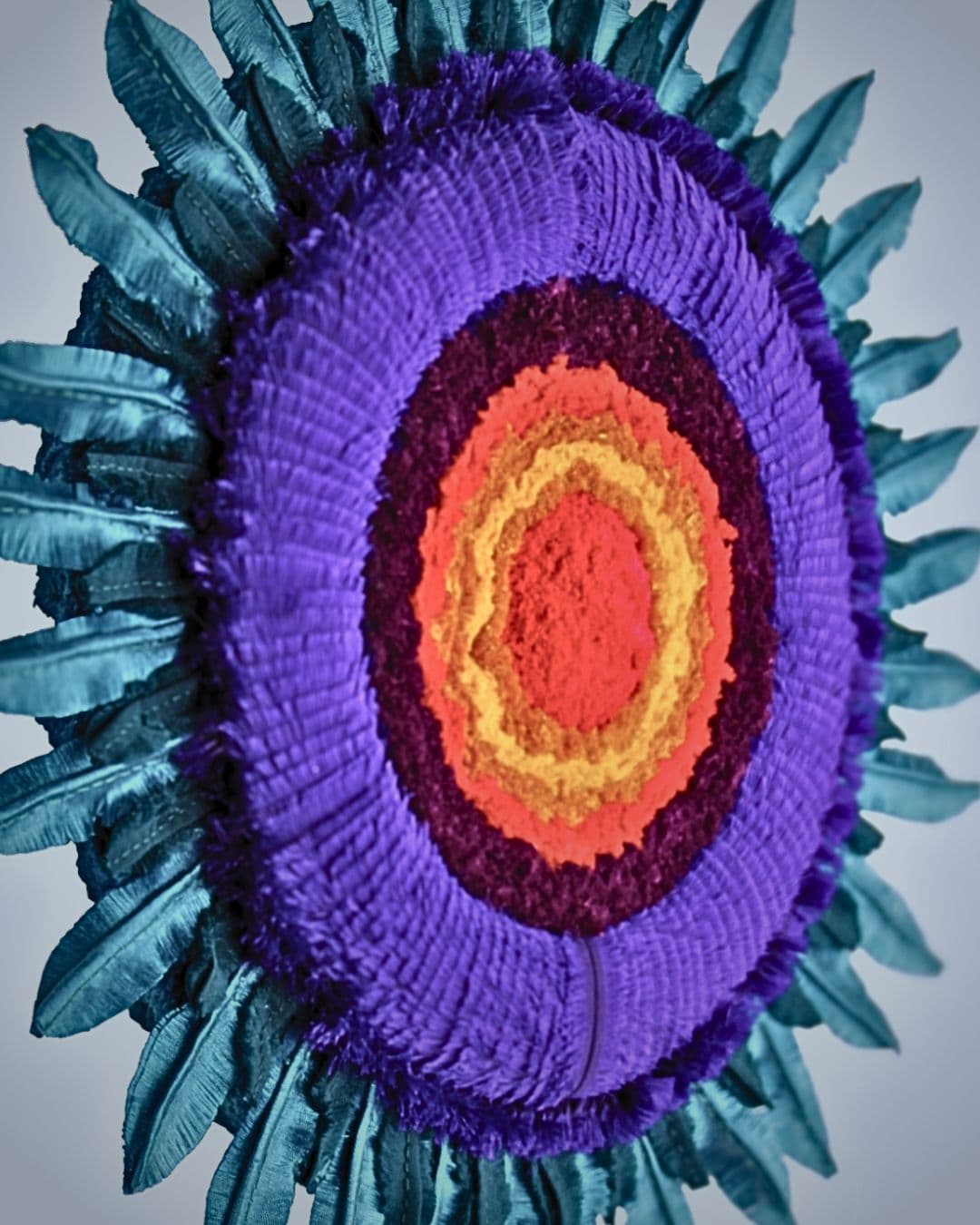
My Wilful Optimism series is created as a refusal to be changed or cowed by evil influence. It serves as hope and defiance in the face of sometimes overwhelming horror.
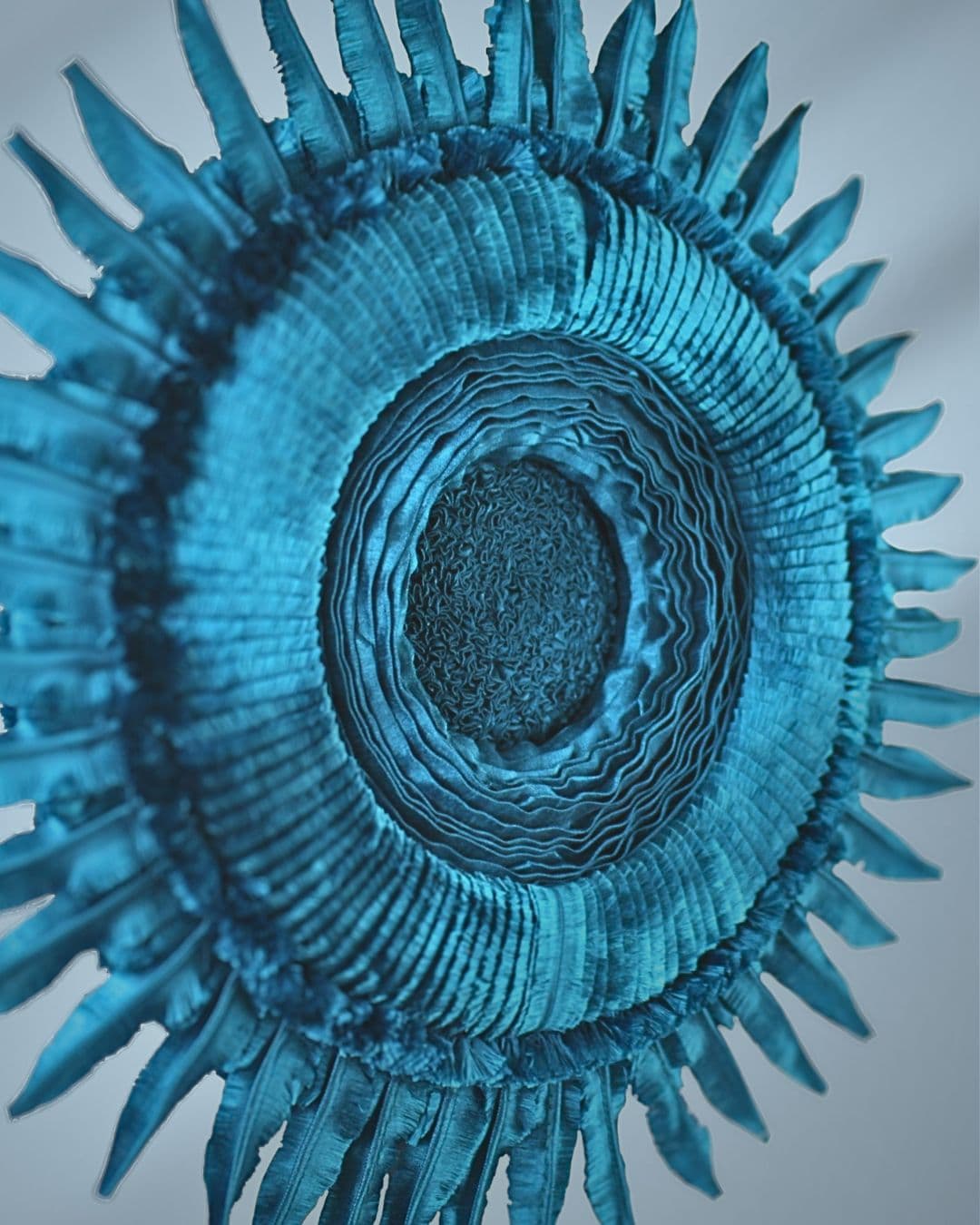
This work uses a lot of fabric. Over the years, I’ve gathered colours that somehow ‘sang’ to me, and I found a home for them in this project. Fabrics include silk, viscose and polyester that unapologetically show off their joyful colour and lustre.
I covered a circular stretcher canvas in the base colour, then I used foam supports and repurposed elements to create alternate receding and burgeoning levels.
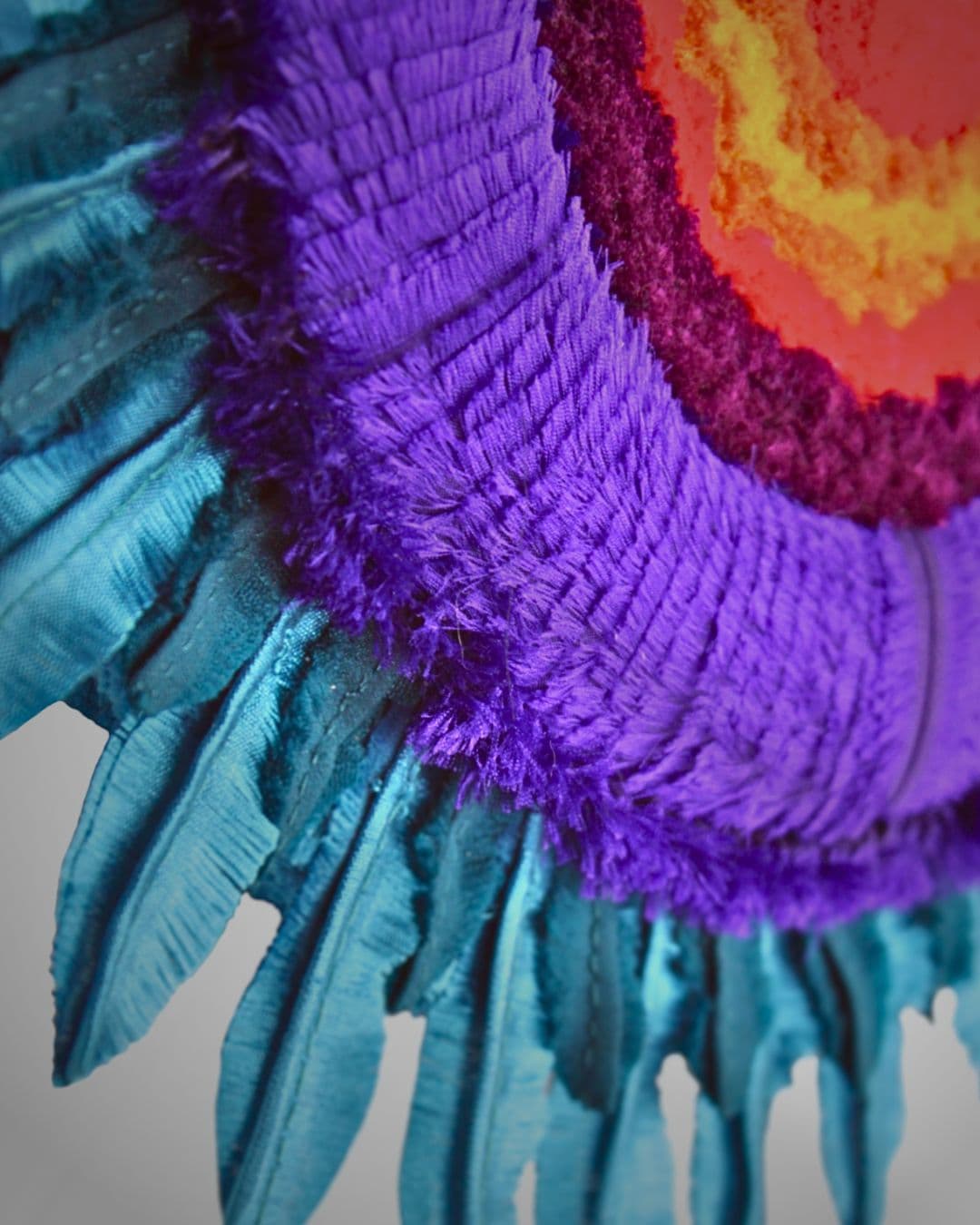
The high-relief base was covered with fringe techniques, and the halo around the outside features my fauxthers to suggest freedom and joy. Everything was then reinforced with floristry wire, cut to shape and attached to a base panel.
Swirling waves & quilling
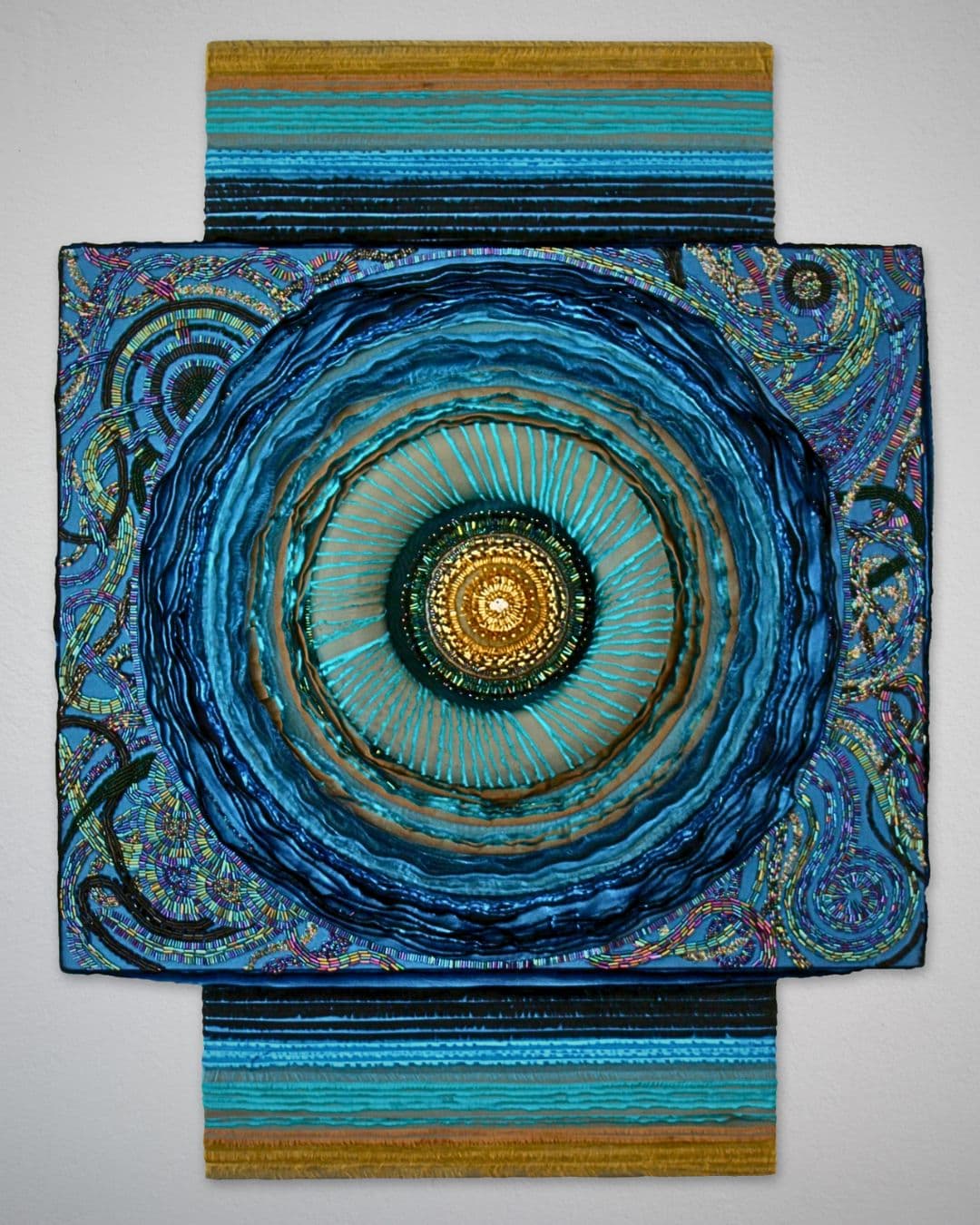
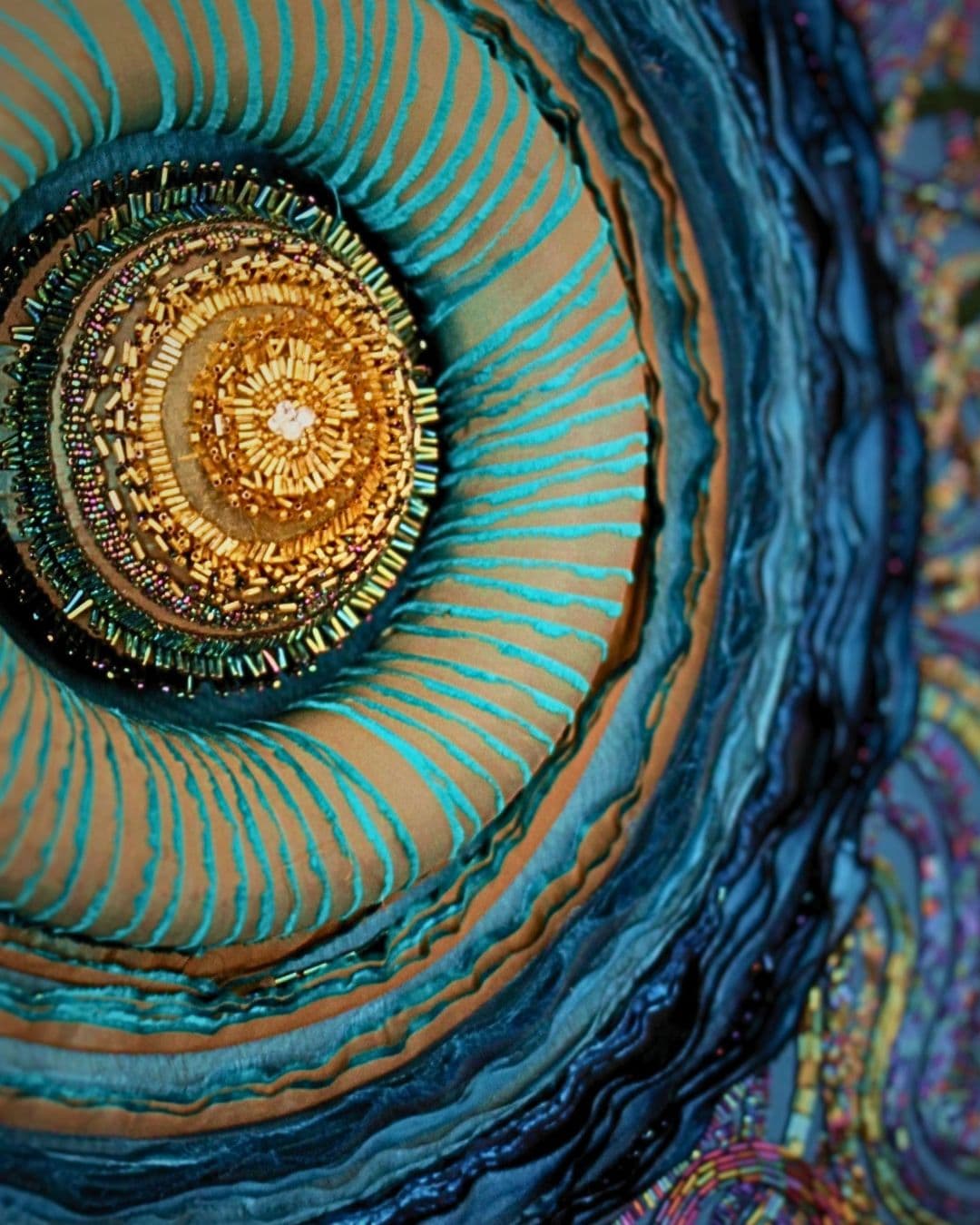
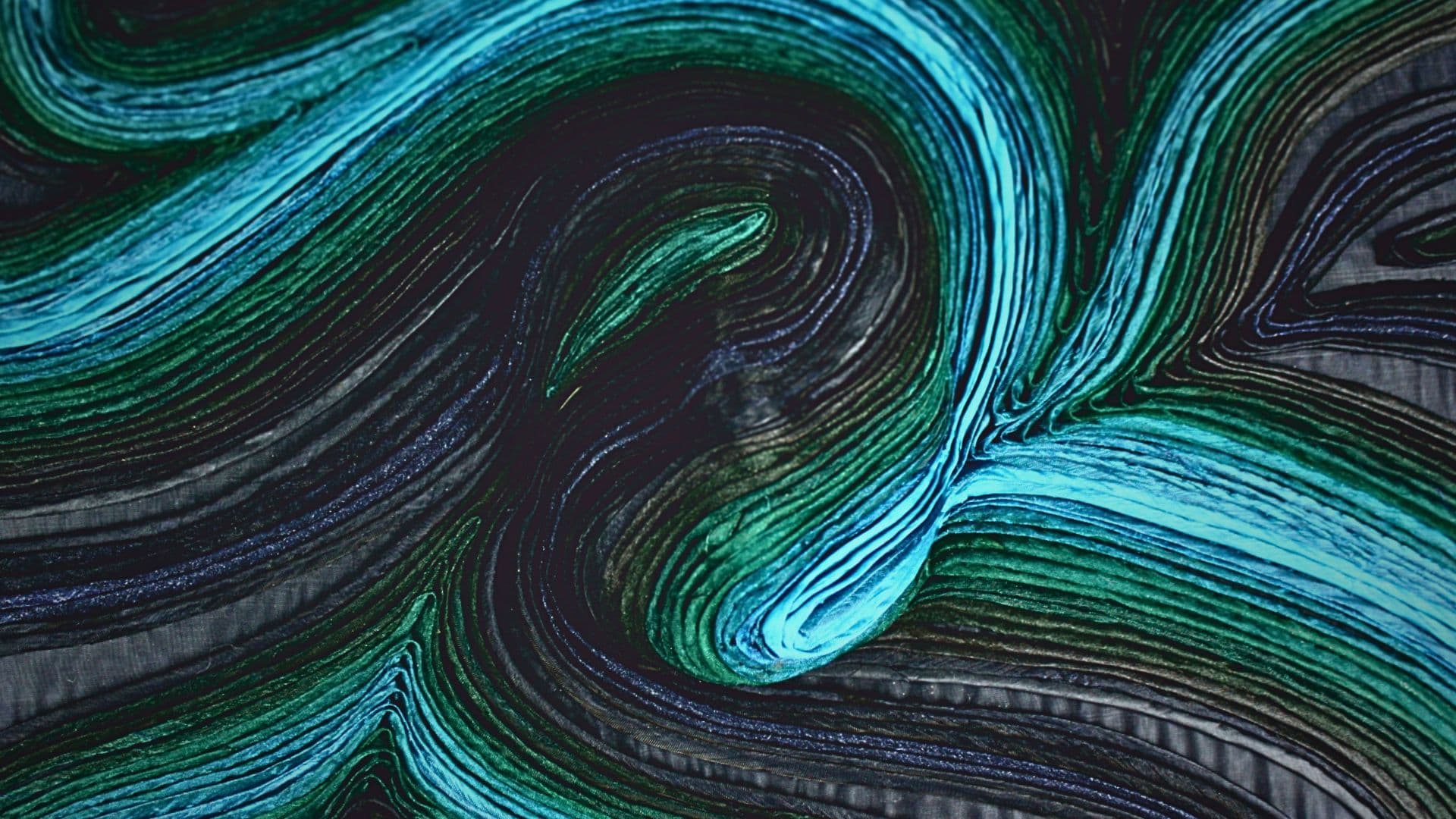
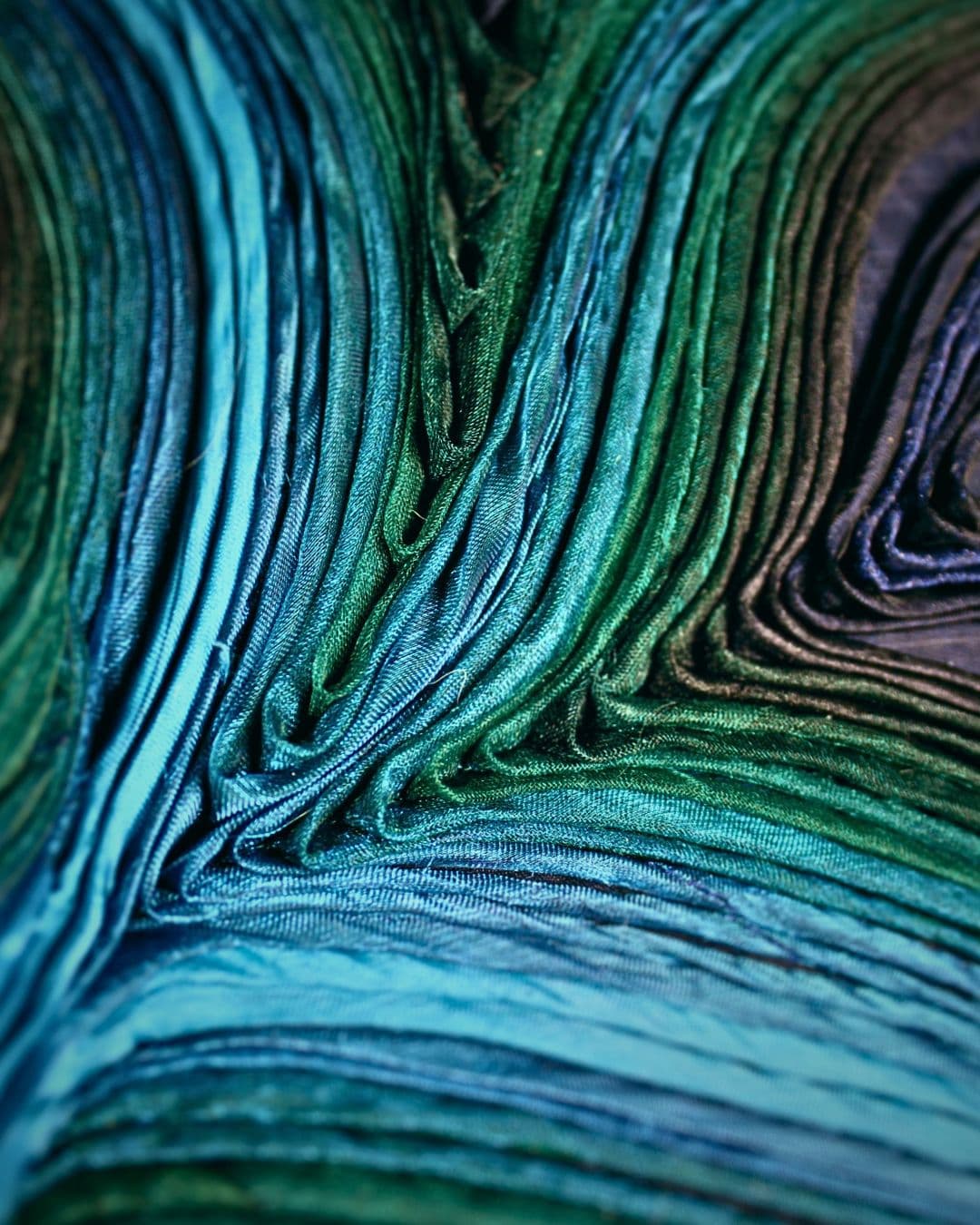
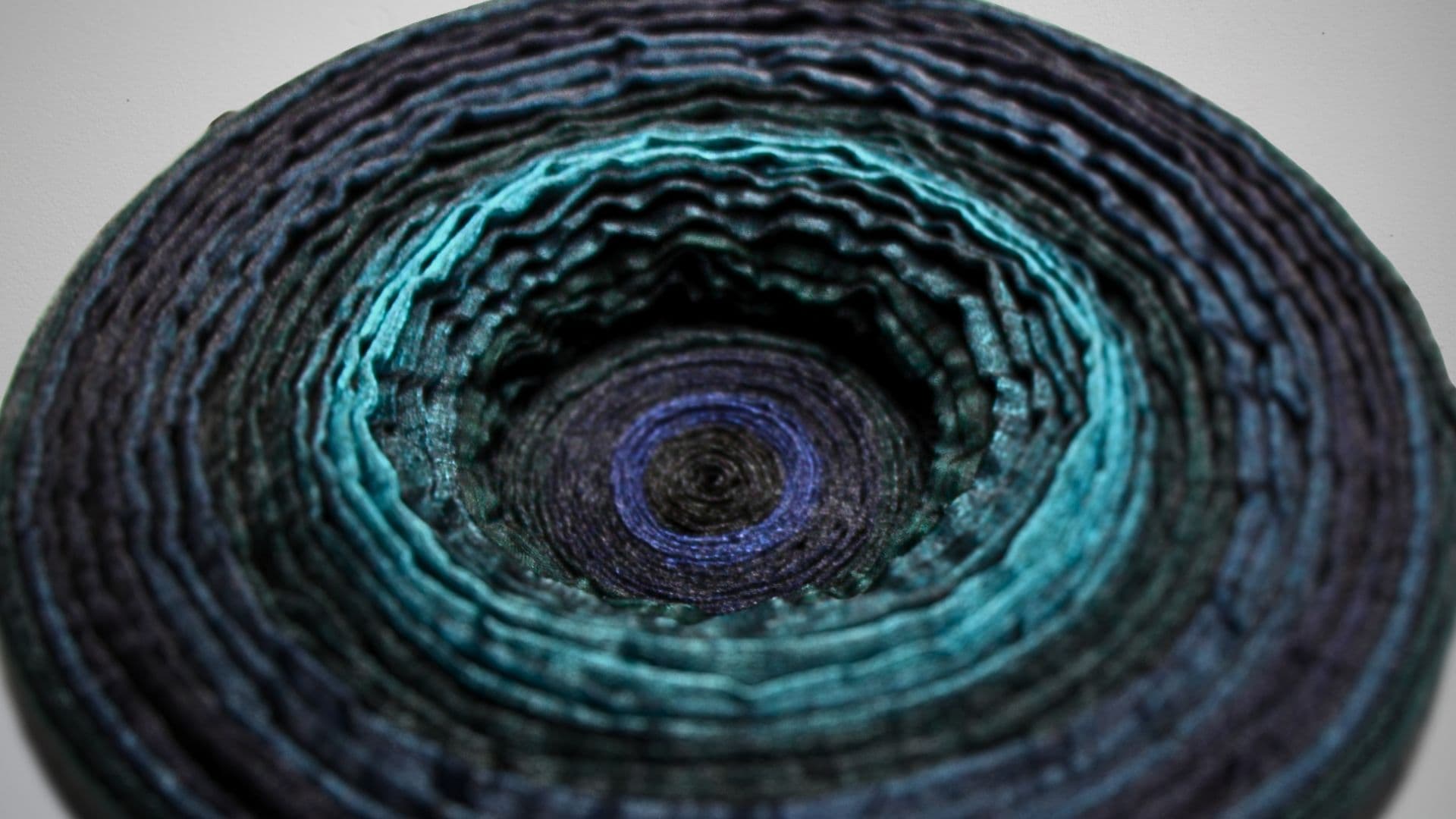
I grew up on a small rural island in Orkney where much of the folklore is focused on the sea. My artwork Mither o’ the Sea references the great spirit that controls the sea in summer. She’s in eternal conflict with Nuckelavee who rules the sea in winter.
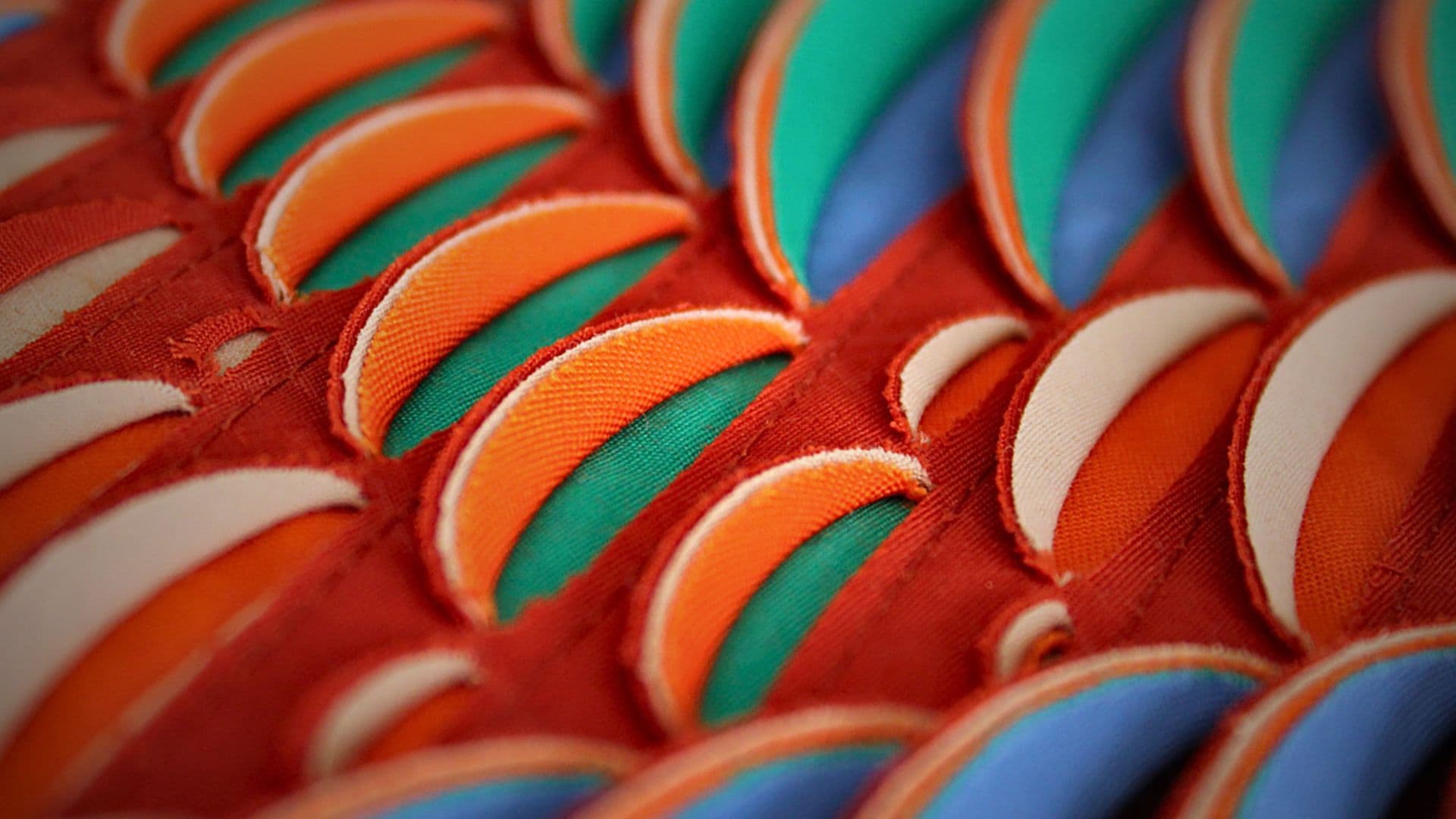
The piece is mostly created in organza on a taffeta base. I used double-layer tube trims, and the wide range of gradient colours was created by layering transparent fabrics. Those were couched down on the taffeta base with a stab stitch following curved lines.
Although it looks like folds and pleats, it’s more like a fabric version of quilling. That gives me complete control in making the trims double back on themselves to create interesting collisions between curved forms.
The centre of the piece is suggestive of a face but made from a swirling wave effect over a three-dimensional support.
Testing my patience
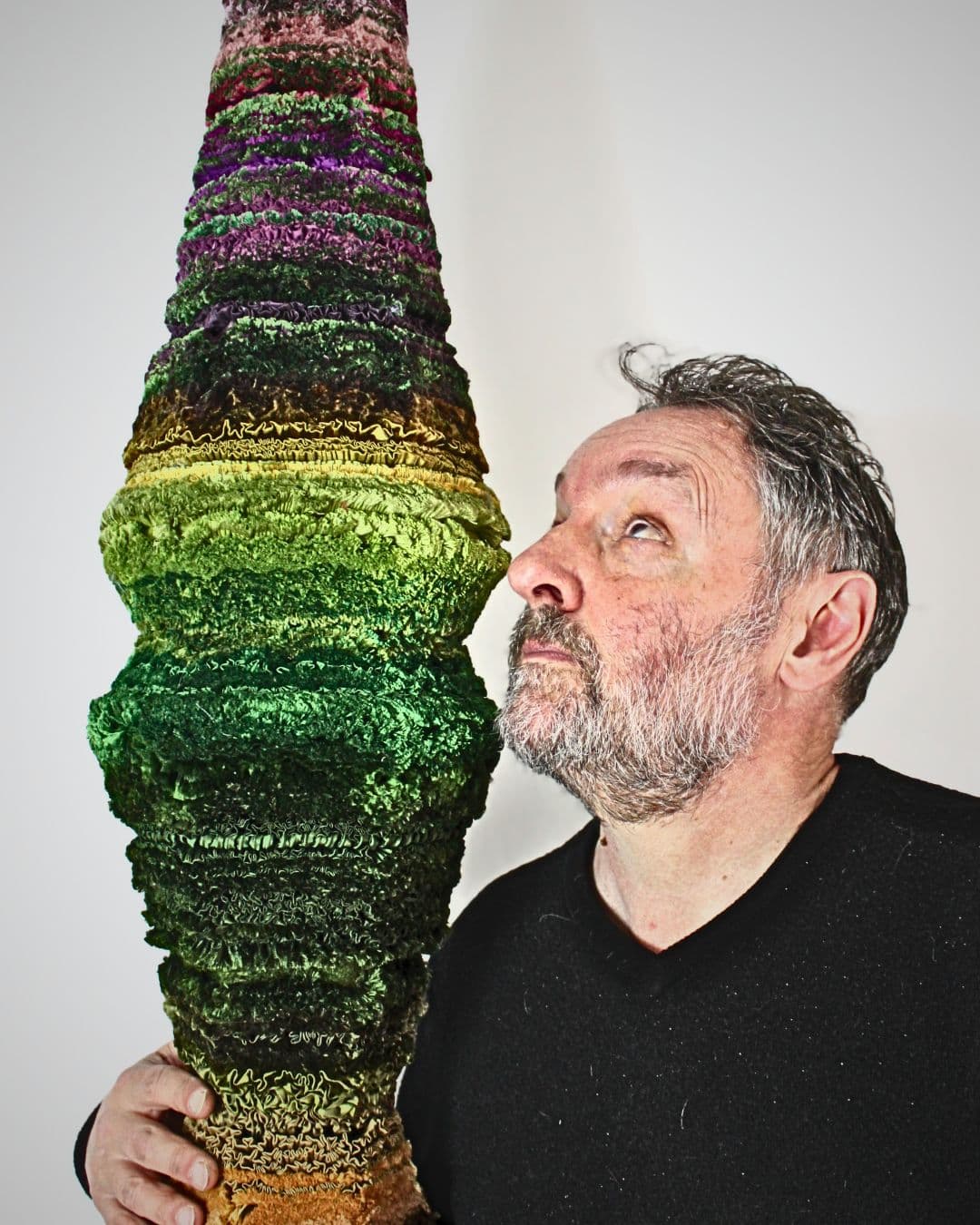
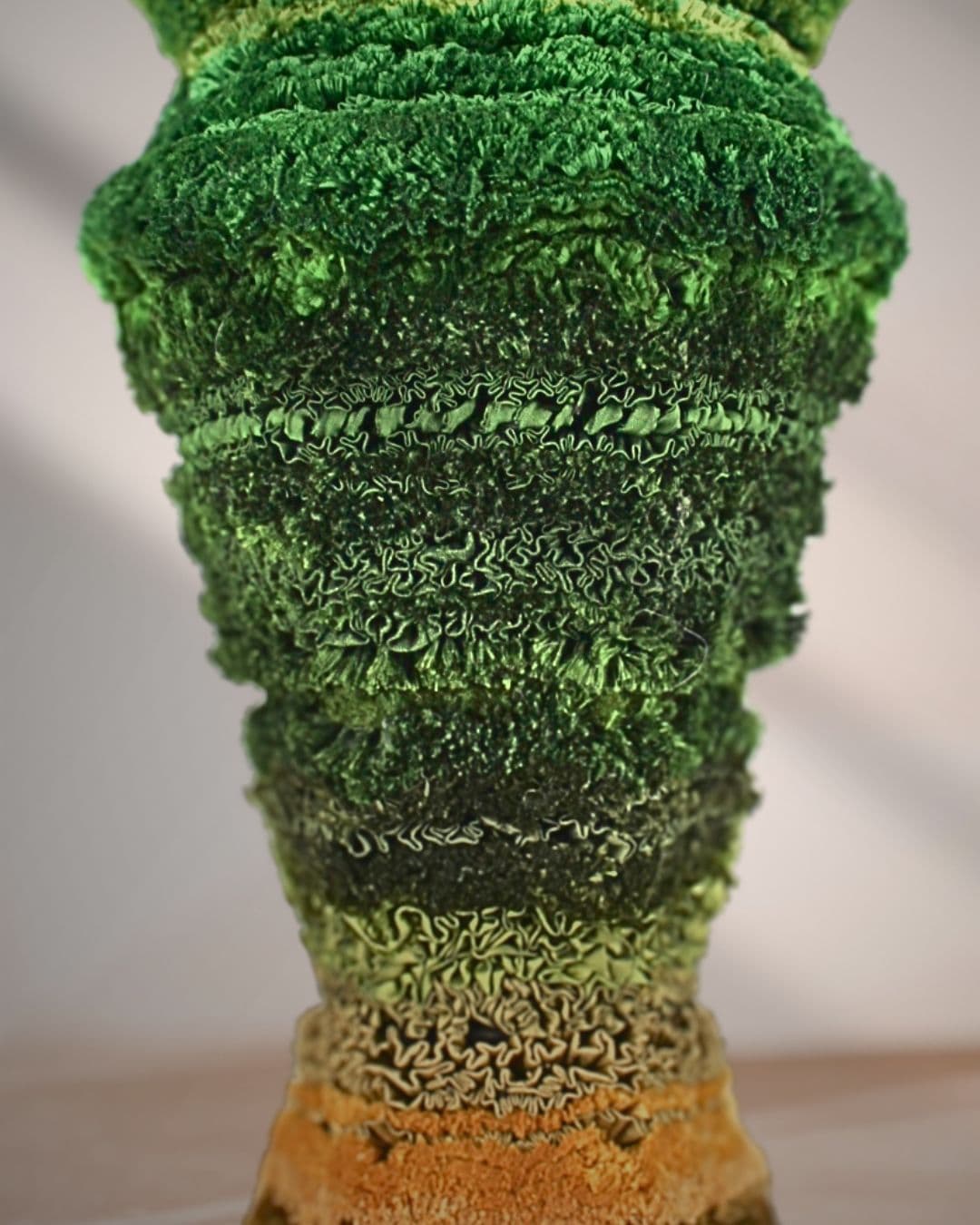
Totem sorely tested my patience with the need for endless preparation and application of miles and miles of fabric and gathered trims. It took almost two years to complete.
It was created in response to an EDGE Textile Artists Scotland brief to interpret an element of one of Scotland’s long distance walking routes, the West Highland Way. For some time, I’d been wanting to create a free-standing sculptural piece, and this was my opportunity.
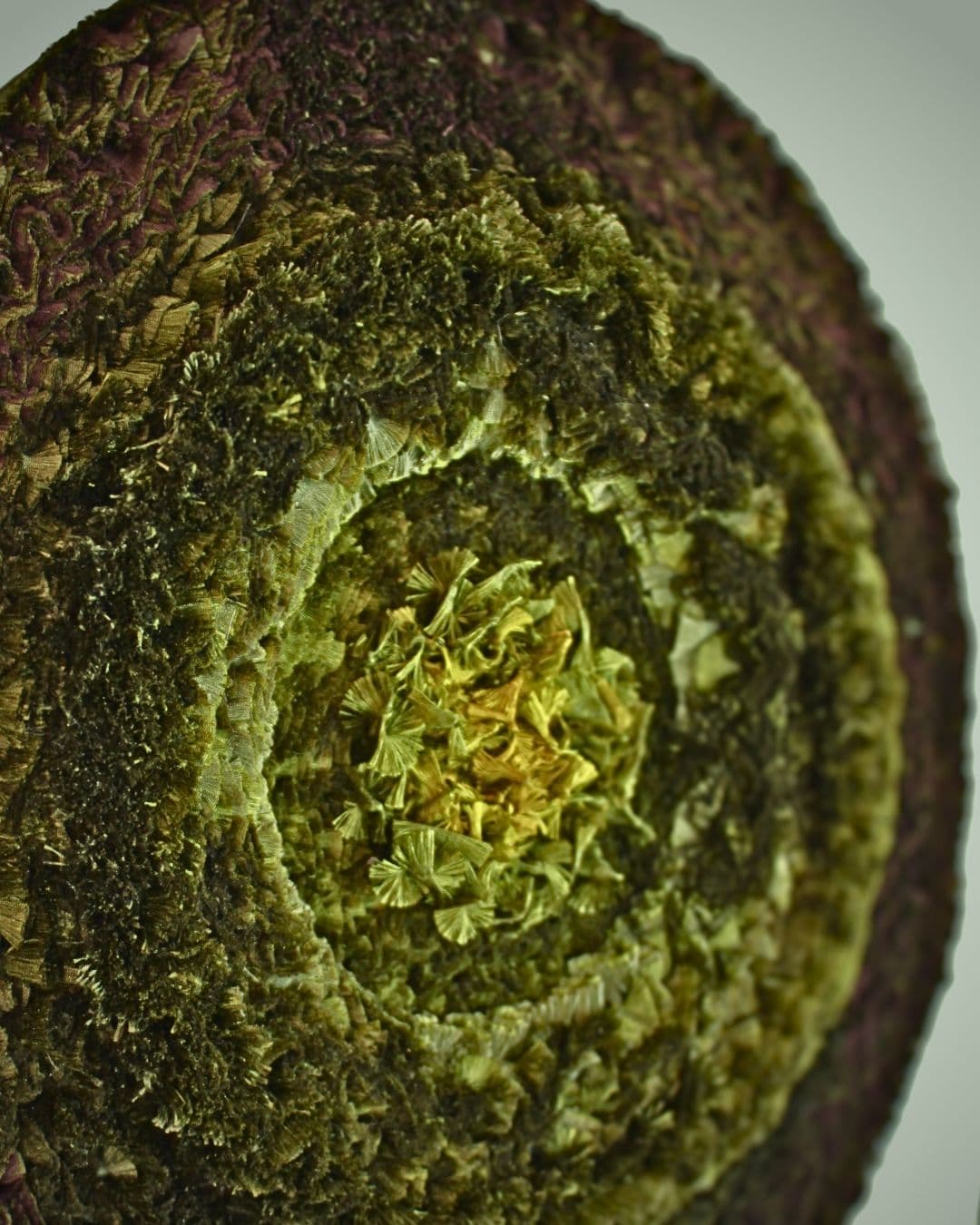
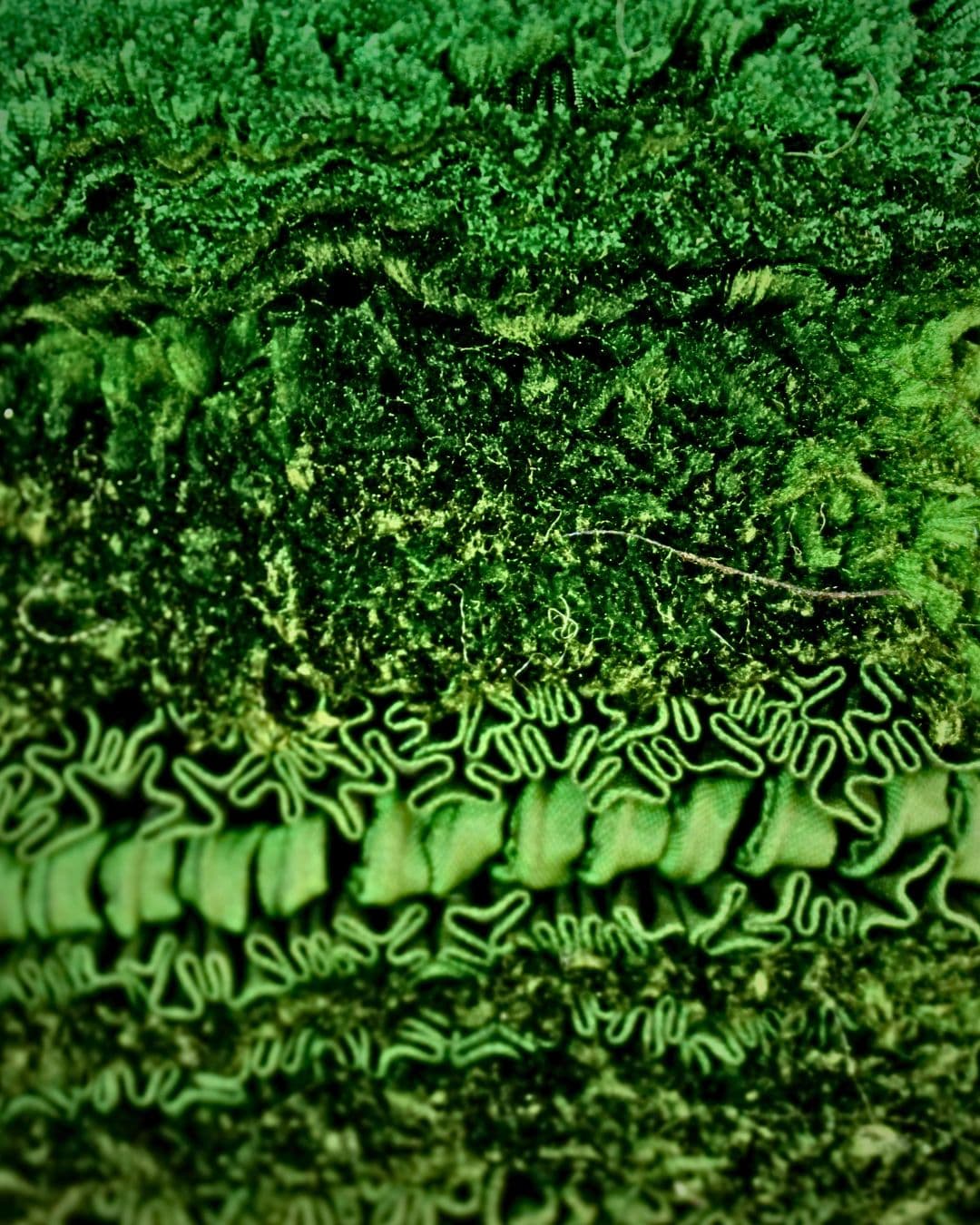
I’d found a steel wire lampshade with an ugly covering that had an interesting form. I removed the covering and began applying fringe-plush and frill trims in colours that reflected elements of the landscape stretching from the central belt to the Highlands.
Creating the piece became absurdly time-consuming, and I missed the EDGE deadline. But I decided to keep at it and expand it to represent Orkney’s landscape, seascape and skyscape.
I added three more sections and two conical end pieces to create a large spindle shape. The spindle references my textile past and present. And the title Totem suggests an iconic representation of identity and belonging.
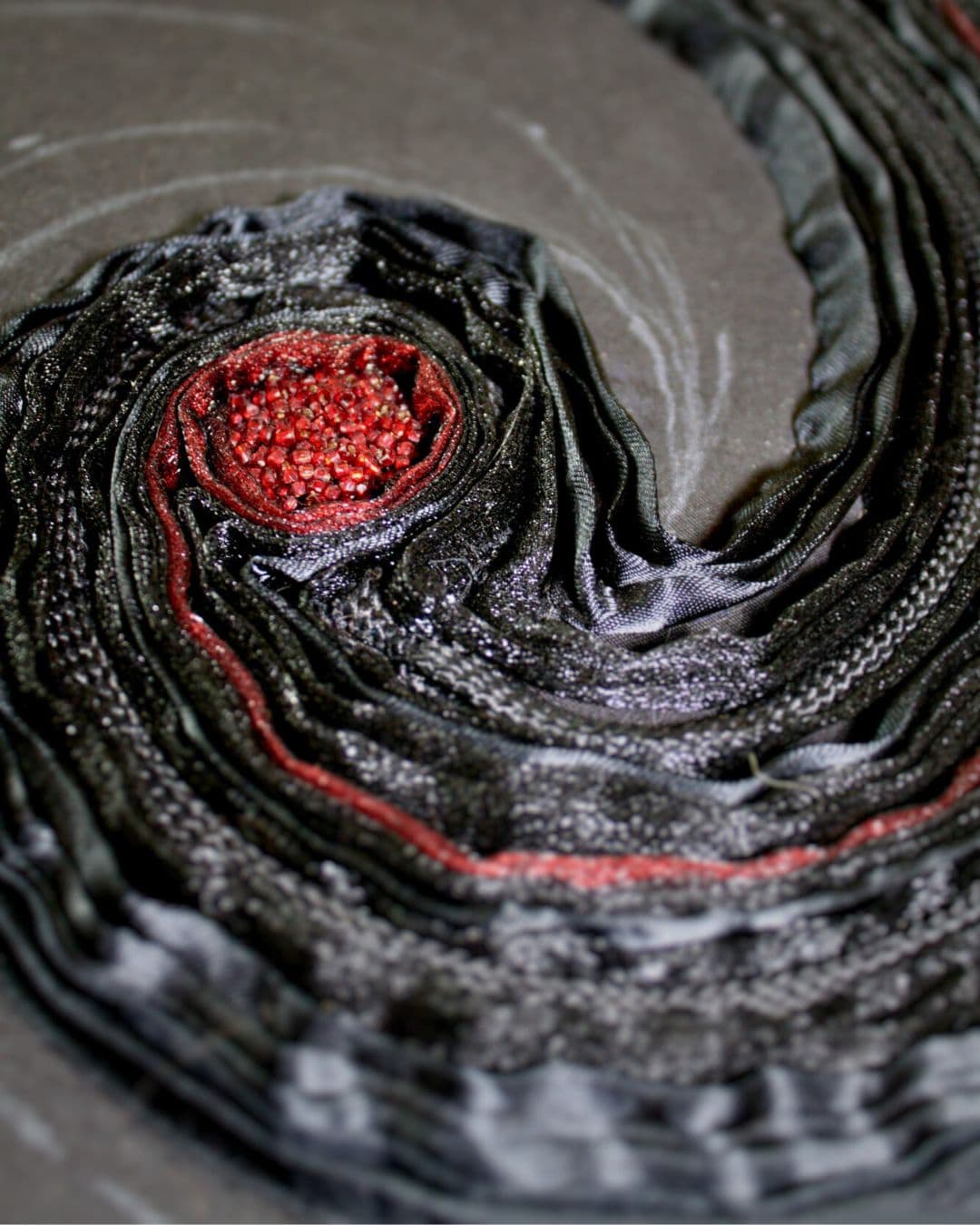
After completing the spindle, I realised I was missing a water element. So, I added a separate spinning whirlpool form below the spindle. The shape references the Great Swelkie whirlpool near Stroma in the Pentland Firth.
Totem incorporates pretty much all my fabric manipulation techniques. The fabrics include silk, viscose, cotton, wool, nylon and polyester. The organza in the upper extremity suggests clouds, while bias-cut spaghetti-strap applications at the bottom give the impression of dense rock strata.
Scotland has many wildflowers in magentas and purples, so that was also an important element. I found an Indian silk sari top in a perfect magenta. I took it apart and used every scrap I could. Nonetheless, the entire amount only covered about an inch and a half of the spindle, and that was only because it was mixed with green!
Sharing my techniques
I’m excited to introduce Stitch Club members to my fabric transformation techniques, perhaps bringing a new element into their vocabulary. And I’m curious to see how they might use the techniques to add extra dimension to their work.
They’ll learn how to take a fabric surface from low- to high-relief, perhaps even into a sculptural dimension. The process takes time, and I encourage members to persist. The techniques need patience and can be frustrating, but I can guarantee the results are immensely satisfying.
“I think that the re-evaluation of textile art’s credibility for artistic expression comes as a result of the many artists who have harnessed social media for self-promotion and communication.”
Adrian Smith
Thoughts on social media
I understand people’s valid frustrations with social media. But as a creative today, I think it presents a very rare opportunity to directly engage with an audience and no (overt) gatekeepers.
I also think that the re-evaluation of textile art’s credibility for artistic expression comes as a result of the many artists who have harnessed social media for self-promotion and communication.
We’re no longer solely dependent on convincing a gallery owner or curator to publicise our work.
My focus is on Instagram, and I’ve learned some key lessons along the way. First, because it can take a long time to create a textile work, I’ve discovered that sharing different stages of my work process appeals to viewers. People love road movies. If you just show them the destination, they miss out on the adventure.
I also try to not take criticism too personally unless it strikes a chord with something I’ve already asked myself.
Lastly, I try to be patient and focus on those who generally appreciate my work. There is absolutely nothing wrong with having just a few likes for a post. You can’t please everyone.
11 comments
Theresa L Watson
Beautiful work and I can appreciate the time spent on it. I started in embroidery for fashion and I know how long hand work takes.
Siân Goff
Absolutely! A labour of love, indeed! Thank you for your comment, Theresa.
Melinda Paterson
Thank you for this wonderful article. Smith’s work is inspiring. What does he mean by the term stab stitch?
Siân Goff
Good question, Melinda. If you search ‘Stab Stitch’ some resources come up – theres a tutorial on youtube that you can watch. Hope this helps!
Susan
Adrian creates and I feel what I see in his work. Thank you for this thoughtful interview. I’ve worked with silks and cottons and beads and miles of satin stitches. I’d love to learn his techniques.
Siân Goff
You’re welcome, Susan. Hopefully you can join us for his Stitch Club workshop on Saturday!
Natalia Manley
Beautiful work and very inspirational. Thank you for showing us. See you on Instagram
Siân Goff
Hi Natalia, thanks for your comment. We’re so glad that you enjoyed the article!
Adrian
Looking forward to sharing these techniques with you all and seeing all the different outcomes.
Jane Axell
Wow Mary Carson! You got a good one there! Right up my street. I can hardly wait to take part in his Stitch Club workshop.
Siân Goff
Hi Jane, it’s a great article isn’t it? We’re so glad you’re excited to take part in Adrian’s workshop! See you inside Stitch Club 🙂